
Your cart is currently empty!
Category: Artifical Intellegence in the 2020s
This book is about the incredible possibilities of Artificial Intelligence (AI) in the 2020s. It covers topics such as machine learning, robotics, healthcare advancements, and more. Learn how AI has already become an integral part of our everyday lives and what new possibilities will be created by this technology in the years to come. Understand how autonomous cars powered by AI could navigate roads with no human intervention and discover why devices like Alexa or Google Home are becoming commonplace in households around the world. Get ready for a revolutionary decade filled with innovative applications of artificial intelligence!
-

AI Limitations, Prompts, & Ideas
Limitations
OpenAI acknowledges that, while AI-generated tools such as Dall-E and GPT-3 can create impressive results, they are still limited in what they can do. For instance, these algorithms cannot replicate the kind of creative thinking and imaginative leaps that often come with human input. Computers may be able to generate content quickly and efficiently but they lack the ability to innovate or develop original ideas.
Additionally, OpenAI understands that a chatbot is not a substitute for human interaction and cannot replicate the kinds of social relationships that people have with each other. Chatbots are programmed to respond to user input within certain parameters; they cannot pick up on subtle cues such as body language or tone of voice – factors that can greatly shape conversations between two people.
OpenAI also recognizes that chatbots are not perfect: there is no guarantee that they will understand every question posed to them or provide an appropriate response. As AI technology continues to advance, its limitations become more apparent; software engineers must be mindful when developing new technologies and consider how AI applications will interact with humans in everyday life.

AI technology is being made to look like humans. It can recognize faces, understand what people say and make decisions. AI is used in robots that help with healthcare, customer service, driving cars, and doing tasks people don’t like. It can even look like a real person! To address this issue, OpenAI does extensive research into how AI should be developed responsibly and ethically. The company works closely with governments, industry partners, non-profits, universities, and other groups focused on managing the development of artificial intelligence systems in ways beneficial for society. Through initiatives such as scholarship programs targeted at increasing diversity in STEM fields like Machine Learning, OpenAI aims to make sure all communities have equal access to cutting-edge technology and job opportunities within the fast growing field of AI.
Prompts
OpenAI provides a variety of chatbot prompt examples for developers and users alike to use when creating their own AI applications. For example, OpenAI’s “Hello World” prompt is a simple yet effective way to get started with natural language processing: “Hello world. What can I do for you?”
Beyond this basic prompt, OpenAI has developed several other examples that can help jumpstart the development process. For instance, prompts such as “Diagnose my symptoms” or “What is the weather like today?” demonstrate how AI-driven technology can be used in real-world situations. Additionally, OpenAI has created more abstract prompts such as “Describe the color blue in one sentence?” which encourage users to interact with bots on a deeper level by attempting to understand complex concepts and ideas.
OpenAI also encourages developers to create their own unique prompts. These might include commands that involve decision making (e.g., “Which route should I take to work today?”), requests for specific information (e.g., “What’s the current price of oil?”), or questions about natural phenomena (e.g., “Why do stars twinkle in the night sky?”). No matter what kind of prompt someone creates, it is important that it is structured correctly so that the chatbot can accurately interpret and respond appropriately.
In addition to these types of prompts, OpenAI also suggests using conversational cues in order to create a more engaging user experience. For instance, phrases such as “Please,” “Thank you,” or “Can you tell me more” show respect and politeness while giving clear direction to the chatbot at the same time. Furthermore, adding details such as dates or times helps enhance conversations by providing context which helps bots better understand requests along with any additional information related to them.
By utilizing OpenAI’s various prompt examples and incorporating conversational cues into conversations, developers and users alike can create a much richer and more meaningful dialogue between people and intelligent machines—making artificial intelligence more accessible than ever before!
Ideas
Chat GPT Idea Generation is a relatively new concept in the field of artificial intelligence. The idea behind it is to create a chatbot that can generate original, creative ideas on its own. This type of AI technology enables the chatbot to explore and come up with possibilities that are not yet discovered by humans, or even those already known but not yet fully realized.
To do this, Chat GPT Idea Generation uses a generative pre-trained transformer (GPT) model. This type of deep learning model, also known as language modeling, involves training a machine such that it can generate new text from a given prompt. In this case, the prompt is generally an open-ended question or statement, and the output is usually an answer or idea related to it. For example, if someone were to ask a question about what types of things they could do for fun on their day off, Chat GPT could offer up multiple suggestions like going for a hike, having dinner at a restaurant or visiting an art gallery.
In addition to offering up original ideas in response to questions posed by humans, Chat GPT can also be used for more complex tasks such as generating entire stories from scratch or coming up with ideas for marketing campaigns. To achieve this feat, more advanced models must be trained on large datasets containing narrative structures and other information relevant to the task at hand. Once these models are sufficiently trained, they can generate compelling stories or creative campaigns without any additional human input or direction—essentially giving developers the ability to access limitless creative potential with minimal effort!
The potential applications of Chat GPT Idea Generation extend beyond just providing answers and creative solutions; it could also eventually help develop smarter robots capable of autonomously performing tasks in areas like healthcare or transportation. Similarly, it could be used by businesses in order to boost their productivity by automating certain workflows and processes. All these applications rely heavily on natural language processing capabilities and thus require robust data sets which contain high levels of semantic richness and accuracy – making Chat GPT Idea Generation an extremely powerful tool for anyone looking to leverage artificial intelligence within their organization.
Chat GPT Idea Qualification and Accuracy is a key factor in the performance of artificial intelligence systems. Chat GPT models must be trained to recognize and interpret natural language data correctly, as well as have the capabilities to generate creative ideas and solutions. Therefore, it’s important for developers and users to understand how these models work and the accuracy of their outputs.
In order to efficiently evaluate the quality of Chat GPT-generated output, developers can use metrics such as semantic similarity scores and perplexity scores. Semantic similarity scores measure how similar two pieces of text are in terms of meaning; thus, they can indicate whether or not a model accurately interprets a user’s input or query and generates an appropriate response. Perplexity scores measure how likely a given piece of text is to appear within a particular context; this metric can help determine if an AI system is able to generate original ideas rather than simply repeating itself or regurgitating facts from existing sources.
In addition to measuring a Chat GPT model’s accuracy, developers must also consider other aspects such as its generative creativity, knowledge representation capabilities, conversational fluency and coherence in order to ensure that its output is up to par with user expectations. For instance, if a chatbot fails to come up with an interesting idea when posed with an open-ended question or has difficulty responding appropriately in certain contexts due to lacking knowledge about specific topics, then this indicates that its level of creativity or understanding is subpar.
It’s also important for developers to test the results generated by their Chat GPT models using real-world scenarios in order ensure that they meet all necessary requirements before being deployed into production environments. Doing so will greatly reduce potential risks associated with putting AI technology into action without first ensuring that it functions properly—ensuring that users have access only high-quality responses backed by accurate data interpretation and sophisticated algorithms.
-

Generative AI as Key Player
Generative AI is becoming a key player in the art and business worlds, allowing people to create stunning visuals and generate new income streams. OpenAI, which has received significant investment from Microsoft, launched Dall-E last year. This deep learning algorithm uses text prompts to create images, videos, and articles that can be used for a range of purposes. For example, someone might use it to generate an image of a Monet painting based on a simple text prompt.
The technology has been gaining traction since its public release last month – Reddit is filled with viral creations made using Dall-E – and this trend has encouraged many other companies to enter the market. Stability AI recently raised $100 million in funding at a valuation of over $1 billion for its open source gen-AI tool Stable Diffusion; meanwhile, Google, Salesforce, and Adobe have released their own in-house versions of the technology (although these tools aren’t available to the public yet open-source).

In recent years, Artificial Intelligence (AI) has been making strides toward taking on a more humanoid appearance. This trend is driven by the increasing sophistication of machine learning algorithms and advances in robotics technology, which are allowing AI to be used to create robots that are more human-like than ever before. These robots can recognize faces, navigate physical environments, and even carry out tasks that would have been impossible for traditional machines. One of the most promising areas where AI is taking on a more humanoid form is in social robotics. Social robots are designed with the end goal of interacting with humans in both natural and meaningful ways. They have advanced facial recognition capabilities, enabling them to recognize people based on their appearance and behavior. They also have voice recognition technology that allows them to understand what people say and respond accordingly. Their ability to interact with humans has made them particularly useful in settings such as healthcare, education, customer service, and more. Another area where AI is becoming increasingly human-like is in the field of autonomous vehicles. Autonomous vehicles use artificial intelligence to navigate roads and make decisions based on the data received from various sensors placed around the vehicle. Thanks to advances in deep learning algorithms, these vehicles can now detect obstacles such as pedestrians or other cars on the road much faster than traditional machines ever could. Moreover, they can learn over time to become better drivers while simultaneously reducing the risk of accidents caused by human error. Additionally, AI-powered robots are being used in manufacturing settings as well as for performing hazardous or tedious tasks that humans can’t do safely or efficiently enough. These robots use sophisticated motion planning algorithms combined with camera vision systems that enable them to effectively complete tasks without any assistance from humans. As AI continues to become more capable over time, we will likely see a significant increase in robotic automation across multiple industries as companies seek out new ways of improving efficiency and productivity while reducing costs associated with labor. AI is being used to create increasingly realistic humanoid figures for use both in entertainment applications and research studies involving social interaction between humans and machines. In both cases, these life-size robotic figures are programed with advanced facial expressions and body language that allow them to convincingly imitate human behaviors during conversations or interactions with people. As this technology continues to become more advanced over time we should expect it will eventually lead to machines that look almost indistinguishable from real people! Originally, Dall-E was being used mainly for creating fun images and memes; however, entrepreneurs are also now putting it to use as a business tool. For example, Jasper – which automates blog post creation using gen-AI – recently raised $125 million at a $1.5 billion valuation. Other startups are using the same principle to design clothes, floor plans, and ad jingles quickly and efficiently. Microsoft has even added Dall-E into its design software suite while Shutterstock intends to use it as part of its stock image library.
Naturally, this kind of technological advancement raises ethical questions about how artists can be compensated for content that ‘feeds’ algorithms like Dall-E, or how it could potentially be used to spread misinformation or create celebrity deep fakes without detection or consent. Additionally, there is the concern that such automation will eventually replace certain jobs – particularly those related to writing or design – although some disagree with this conclusion due to the need for creativity still being involved in AI-generated work.
It’s clear that generative AI is highly visible yet extremely valuable: Sequoia Capital estimates that it could bring “trillions in value” by revolutionizing industries that require original works created by humans. The technology already has a wide range of applications beyond art creation but with gen-AIs becoming increasingly accessible they look set to have an even bigger impact on our lives moving forward.
OpenAI is an artificial intelligence research laboratory created to explore the potential of AI and develop applications that are beneficial for society. Founded in 2015 by Elon Musk, Sam Altman, Greg Brockman, and others, OpenAI aims to advance digital intelligence in a way that is safe and responsible. The company is committed to open-source AI tools and techniques that can be used by everyone.
OpenAI’s lab-based researchers focus on machine learning algorithms and technologies such as Generative Adversarial Networks (GANs), Reinforcement Learning, Natural Language Processing (NLP), and Computer Vision. Through these projects, OpenAI hopes to not only advance the field of AI but also help solve real-world problems.
OpenAI recently launched its Dall-E project which allows users to create images, videos and articles using text prompts—a development that has created a lot of buzz in recent months. Additionally, OpenAI has provided the public with several open-source tools such as GPT-3 which enables natural language processing without manual programming or large amounts of training data.
As outlined in its mission statement, OpenAI places great emphasis on safety and responsibility when it comes to AI technology. The company works closely with governments, universities, industry partners, and other groups on ethical standards for developing new AI-based products and services. OpenAI also strives for transparency when it comes to collaborations so that their work remains aligned with the public’s best interests.
In addition to its research-focused activities, OpenAI actively contributes to global education initiatives such as scholarship programs aimed at increasing diversity in STEM fields like Machine Learning through outreach partnerships. This commitment is part of an effort to make sure that all communities have equal access to cutting-edge technology as well as job opportunities in the fast-growing artificial intelligence sector.
-
Generative AI Jumpstart
Generative AI as opposed to AI
Generative AI is a type of Artificial Intelligence (AI) that is focused on creating new content from scratch. Unlike traditional AI, which focuses on using existing data to answer questions or solve problems, Generative AI can create technical content and imagery without the need for human input. This technology enables computers to learn from past experiences and generate new output based on what it has learned. Generative AI has the potential to revolutionize how businesses create technical content and imagery, drastically reducing time and cost associated with manual labor. By leveraging generative technologies, businesses can quickly prototype products, services, and applications in order to gain valuable insights into customer demand. Additionally, Generative AI can be used to develop predictive models that accurately anticipate customer needs or market trends. In short, Generative AI is a powerful tool for businesses to create technical content and imagery with minimal effort.
Stack Ideas for your Creative Workflows
DALL·E 2 is an AI-based creative tool developed by OpenAI that is capable of generating lifelike images from text descriptions. It is based on a Generative Pre-trained Transformer 3 (GPT-3) model and uses natural language processing to interpret the user’s input. By combining the power of GPT-3 with powerful image recognition algorithms, DALL·E 2 can generate technical content and imagery like never before. This technology has been used to produce impressive results such as highly realistic paintings, photorealistic animations, and interactive virtual environments.
Midjourney is another AI-based platform created by Adobe that enables users to create technical content and imagery in an intuitive manner. Midjourney integrates machine learning approaches such as generative neural networks and deep learning algorithms to enable users to quickly create visually appealing graphics. The platform also offers users a variety of customizable tools that allow them to quickly generate technical visuals for websites, mobile applications, and more.
BariumAI is a cloud-based AI platform designed for digital asset management (DAM). This platform allows users to store technical assets such as technical documents, images, videos, audio files, and more in a secure cloud environment. Additionally, BariumAI provides users with intelligent search capabilities that leverage deep learning algorithms to quickly locate technical content and imagery within the system.

Finally, D-ID AI is an AI-powered facial recognition tool that can be used for authentication purposes. The software utilizes both deep learning algorithms and image recognition algorithms in order to accurately identify faces in photos or videos. D-ID AI helps businesses improve their security measures by providing access control without requiring physical identification documents or passwords.
WebAR and AI
WebAR, or Web-based Augmented Reality, is a technology that allows users to view and interact with digital content in the real world. By using the latest advancements in web-connected 3D graphics, WebAR can render virtual objects directly onto a real-world environment using your device’s camera.
Using this technology, users can experience augmented reality (AR) on the web without having to download a dedicated app. This is especially useful for technical applications such as training and technical instruction, where users can view complex technical information from an AR interface. For instance, technical instructions could be displayed in an AR overlay on top of an object being worked on.
WebAR also has potential applications beyond technical use cases as it offers a more immersive way of interacting with websites and webpages. With WebAR, businesses can create unique experiences for their customers by displaying information about their products in 3D on a webpage or through a browser window. Additionally, developers could use 3D models and animations to bring technical interfaces to life, allowing users to explore technical data more easily and intuitively than before.
WebAR enables manufacturers to showcase technical products in 3D without requiring users to download any new software or hardware; all they need is an internet connection and a compatible device. This allows businesses to quickly reach new audiences with technical content and imagery without needing to spend time developing native apps or hardware solutions.
Use Case Examples
Augmented Reality (AR) is quickly becoming a powerful technology in technical applications. AR can be used to provide technical instruction and training in a more immersive way and allows users to explore technical data more easily and intuitively than before.
For example, AR can be used for technical product design such as automotive components or medical implants. With the help of 3D models, technical professionals are able to view the design from any angle and interact with it in real-time inside of their own environment. Furthermore, 3D visualizations of technical data can be displayed directly onto physical objects, allowing technical professionals to work with higher accuracy and efficiency.
In manufacturing, AR can enable workers to access technical instructions for each component on the assembly line without having to refer to paper manuals or consult an expert. This type of application helps reduce manual errors while increasing productivity at the same time. Additionally, manufacturers are able to visualize technical processes such as part selection or inspection in an interactive manner through augmented reality.
The potential applications of AR don’t stop there; businesses can create unique experiences for customers by displaying technical information about their products in 3D on a webpage or through a browser window. This type of experience eliminates the need for users to download any additional software or hardware; all they need is an internet connection and a compatible device. This allows businesses to quickly reach new audiences with technical content and imagery without needing to spend time developing native apps or hardware solutions.
Technical professionals are now able to access real-time updates on complex systems including power grids or communication networks using an Augmented Reality interface. By providing remote access and visualization of these systems, the technical personnel are able to perform maintenance and repairs faster while reducing costly downtime at the same time.

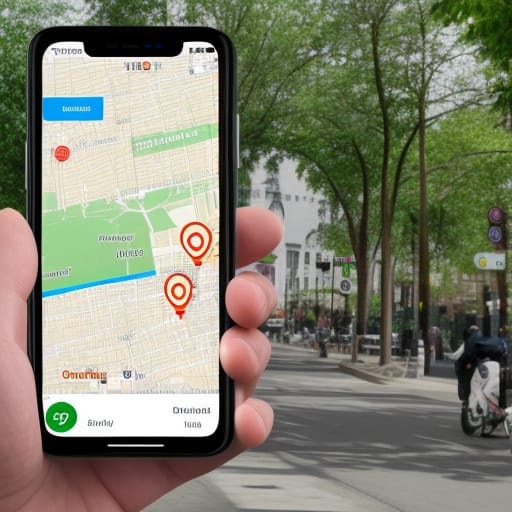
Majestic Vision is taking technical professionals to the next level with their innovative Augmented Reality adventures! Utilizing remote access and visualization, technical personnel can now interact with complex systems such as power grids or communication networks in real-time. This reduces costly downtime while providing a more immersive experience when exploring technical data. AR-enabled maps are also being used to verify data accuracy, provide contextual information about points of interest, guide customers step-by-step towards businesses or other locations, and bring technical interfaces to life. By harnessing the capabilities of this new technology, technical professionals have an invaluable tool for product design, manufacturing procedures, customer experiences or system maintenance that promises revolutionary use cases in the near future. Join Majestic Vision on their Augmented Reality journey today! Augmented Reality (AR) is becoming increasingly popular in map applications, allowing users to explore their environment with a more immersive and interactive experience. AR can be used to create 3D maps that display detailed information about an area such as points of interest, landmarks, and other features. With the help of 3D models, users can view these features from any angle and interact with them in real-time inside of their own environment.
AR-Enabled Maps
Moreover, AR-enabled maps can verify data accuracy by using geolocation technology to accurately display the user’s position and orientation on the map at any given moment. This feature can be particularly useful for navigation purposes or when searching for a specific location or landmark. Additionally, AR-enabled maps can provide contextual information about each point of interest such as opening hours, contact details, reviews, or ratings.
Furthermore, businesses are able to use AR-enabled maps to guide customers step-by-step towards their stores or other locations. This type of application helps reduce manual errors while increasing productivity at the same time; customers are able to find businesses quickly and easily without having to consult multiple sources. Furthermore, they are able to access technical instructions on how to reach places directly inside their own environment without having to refer to paper manuals or consult an expert.
AR-enabled maps also have potential applications beyond navigational use cases as they offer a more immersive way of interacting with webpages and websites. With AR Maps businesses can create unique experiences for their customers by displaying technical information about their products in 3D on a webpage or through a browser window. Additionally, developers could use 3D models and animations to bring technical interfaces to life when exploring technical data more easily and intuitively than before.
Business owners are able to take advantage of real-time updates on complex systems including power grids or communication networks using an Augmented Reality interface for better mapping results in areas with limited infrastructure support such as rural locations. By providing remote access and visualization of these systems technical personnel are able to perform maintenance and repairs faster while reducing costly downtime at the same time.
Overall, Augmented Reality is transforming how we interact with technical content and imagery like never before. Whether it’s used for product design, manufacturing procedures, customer experiences or system maintenance; AR has become an invaluable tool for technical professionals around the world that promises many more revolutionary use cases in the years ahead.
THE END. 🙂 🙂 😀 <3 <3<3<3<3<3<3 TQVM THANK YOU VERY MUCH FOR READING!