
Your cart is currently empty!
Category: Blog
Design, philosophy, and technology are three incredibly important fields that have a profound impact on our lives. But they can be difficult to understand. That’s why we created the Dasein Designs Ezine & blog roll – to make these topics more accessible to everyone. We offer a unique perspective on design, philosophy, and technology. We hope you enjoy reading our content as much as we enjoyed creating it!
-

Da-sein
The term “existentialism” was first coined by Gabriel Marcel in the 1940s. existentialism became popularized by Jean-Paul Sartre in the 1950s. Other notable existential philosophers include Friedrich Nietzsche, Martin Heidegger, Karl Jaspers, and Gabriel Marcel.
Existentialists often focus on topics such as death, freedom, and the human condition. They believe that it is our responsibility to create our own lives, and to find our own meaning in existence.
One of the most important concepts in existentialism is da-sein, which is a German word meaning “being there” or “existence.” This concept emphasizes our individual existence, and the unique perspective that each of us has on the world.
Existentialism is a complex and challenging philosophical movement that has had a significant impact on literature, art, and philosophy. It is worth studying if you are interested in exploring different ways of thinking about life, freedom, and human nature.
Da-sein is often used to refer to the human condition, as it highlights our mortality and the fact that we are all ultimately responsible for our own lives. This can be a difficult concept to accept, as it means that we cannot rely on anyone else to provide meaning or purpose in our lives. Instead, we must create our own meaning and purpose.
This may seem like a daunting task, but it is also liberating. Once we realize that we are responsible for our own lives, we can do anything we want with them. We are no longer bound by the expectations of others, or by society’s rules and conventions. We can be our own person, and live our lives in the way that we see fit.
Da-sein is a powerful concept that can help us to understand and accept the human condition. It reminds us that we are all responsible for our own lives, and that we have the freedom to live them in any way we choose. Da-sein is an important part of existentialism, and it is a concept that everyone should try to understand.
-
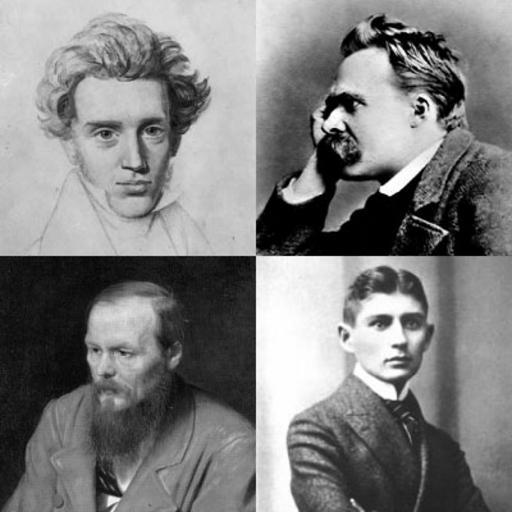
Existentialists: The Top Five
Some thinkers posit that there are five primary existential philosophers: Jean-Paul Sartre, Friedrich Nietzsche, Martin Heidegger, Karl Jaspers, and Gabriel Marcel. Their books explore different aspects of existentialism, and offer different perspectives on this unique philosophical movement.
Jean-Paul Sartre was a French philosopher who is considered to be the founder of existentialism. His book, “Existentialism is a Humanism”, explores the central concepts of existentialism, and argues that existentialists are humanists because they believe in the inherent potential of humans to create their own meaning in life.
Friedrich Nietzsche was a German philosopher who was highly influential in the development of existentialism. His book, “The Birth of Tragedy”, explores the concept of the Dionysian, which refers to the power of the creative artist to confront the meaninglessness of life and to affirm life in spite of it.
Martin Heidegger was a German philosopher who was highly influential in the development of existentialism. His book, “Being and Time”, is considered to be one of the most important existentialist texts. It explores the concept of Da-sein, which refers to being-in-the-world. Heidegger argues that Da-sein is always situated within its context, and that it is impossible to divorce oneself from one’s surroundings.
Karl Jaspers was a German philosopher who was highly influential in the development of existentialism. His book, “Philosophy: An Introduction”, provides an overview of existentialist thought, and discusses how existentialists approach philosophical problems.
Gabriel Marcel was a French philosopher who was highly influenced by existentialism. His book, “The Mystery of Being”, discusses different aspects of existential thought, including freedom, being, time, and others.
-
Existentialism as Discourse
Existentialism is a philosophical discourse that emphasizes individual freedom and choice, and the inherent meaninglessness of life. Existentialists believe that humans must create their own values and meanings in order to live purposeful lives.
Some of the most famous existential philosophers include Jean-Paul Sartre, Friedrich Nietzsche, Martin Heidegger, and existential psychiatrist Viktor Frankl.
Sartre’s seminal work Being and Nothingness explores the nature of human existence and the idea that humans are responsible for creating their own meanings in life. In contrast, Nietzsche’s work Thus Spoke Zarathustra posits that life is ultimately meaningless and that individuals should embrace nihilism as a way of living authentically. Heidegger’s work Being and Time examines the relationship between humans and their environment, and how this relationship shapes our understanding of existence. Finally, Frankl’s book Man’s Search for Meaning explores the idea that meaning can be found in even the most difficult of life circumstances.
Friedrich Nietzsche was a German philosopher who lived from 1844-1900. He is considered one of the most influential existentialists, and is best known for his work Thus Spoke Zarathustra. In this work, Nietzsche promotes the idea of “Living life as if it were your last day.” He argues that individuals should embrace nihilism in order to live authentically and without regret.
Here is more information on the other key Existentialists:
1. Heidegger was a German existential philosopher who wrote extensively on the nature of existence and the human relationship to the environment.
2. His most famous work, Being and Time, examines the ways in which humans understand their own existence.
3. Heidegger was heavily influenced by the work of Kierkegaard and Nietzsche, and he sought to create a synthesis of their ideas.
4. Heidegger was a Nazi sympathizer during World War II, and he was later accused of participating in the Holocaust.
1. Jean-Paul Sartre was a French existentialist philosopher who wrote extensively on the nature of existence and the human condition.
2. Sartre is considered one of the most important existential thinkers, and his work has been highly influential in subsequent philosophical discourse.
3. Sartre’s most famous work, Being and Nothingness, explores the idea that humans are responsible for creating their own values and meanings in life.
4. Sartre was a vocal opponent of existential nihilism, and he argued that humans have an inherent need to find meaning in life.
1. Viktor Frankl was an existential psychiatrist who wrote extensively on the human need for meaning.
2. Frankl’s most famous work, Man’s Search for Meaning, explores the various ways in which humans find meaning in life.
3. Frankl was a Holocaust survivor, and he drew on his experiences during the Holocaust to write about the human need for meaning.
4. Frankl was the founder of logotherapy, which is a form of existential therapy that focuses on the search for meaning in life.
Viktor Frankl, who was a Holocaust survivor and drew on his experiences during the Holocaust to write about the human need for meaning, suggested that Logotherapy is based on the idea that humans are motivated by a need to find meaning in their lives, and that this need is essential for psychological well-being.
Critics of existentialism argue that existentialism is a pessimistic philosophy that leads to a sense of despair and hopelessness. However, proponents of existentialism argue that existentialism can be a liberating philosophy that allows individuals to confront the existential challenges of life.
***
Standard benefits of Logotherapy:
– Helps individuals find meaning in life
– Offers a new perspective on existential problems
– Addresses the root cause of psychological problems
Emotional benefits:
– Leads to self-awareness and self-acceptance
– Encourages growth and change
– Promotes inner peace and happiness
-

Transhumanist Philosopher King
Plato’s philosopher king is a ruler who bases his decisions on wisdom and knowledge, rather than on personal gain or self-interest. He is able to see beyond the illusions of physical existence and understand the true nature of reality.
Transhumanism is a movement that seeks to use technology to transcend the limitations of human biology. Transhumanists believe that it is possible to merge human biology with technology in order to create a new form of life that is superior to traditional humans.
Critics argue that the concept of transhumanism is unrealistic and impractical. They argue that it is impossible to create a new form of life that is superior to traditional humans. Furthermore, they argue that even if such a thing were possible, it would be dangerous and unethical.
Some transhumanists believe that the philosopher king described by Plato could be created through technology. They believe that by using technology to merge human biology with artificial intelligence, it would be possible to create a being that is wiser and more intelligent than any human. Furthermore, they believe that such a being would be able to rule over humans in a just and wise manner.
Critics argue that the concept of a transhumanist philosopher king is even more unrealistic and impractical than the traditional concept of a philosopher king. They argue that it is not only impossible to create such a being, but also unethical. They argue that any attempt to create a being that is superior to humans would likely result in disaster.
The idea of a philosopher king has been criticized as being unrealistic and impractical. However, the concept of a transhumanist philosopher king is even more far-fetched. The idea of using technology to create a being that is wiser and more intelligent than any human is not only impossible, but also unethical. Any attempt to create such a being would likely result in disaster.
-
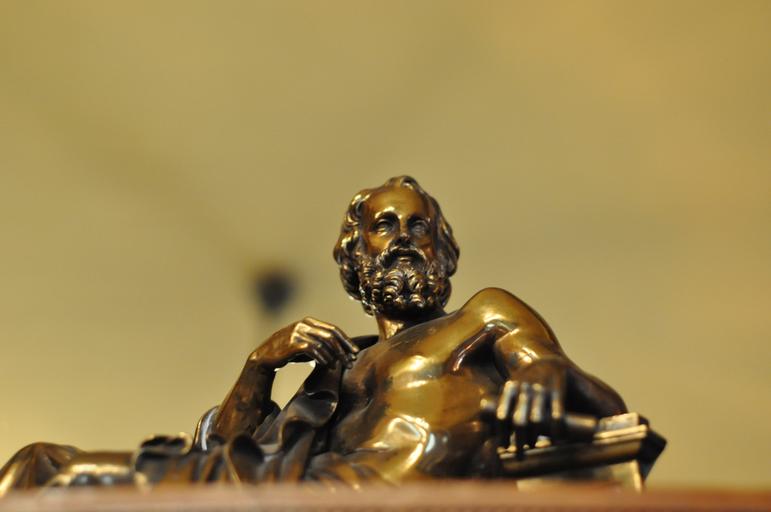
Allegory of the Cave
Plato’s “Allegory of the Cave” is one of the philosopher’s most renowned and well-known allegories. In this story, Plato describes a group of prisoners who have been chained in a cave since birth. These prisoners are only able to see the shadows on the wall in front of them and believe that these shadows are reality. One day, one of the prisoners is released from his chains and is able to see the true nature of reality for the first time. He is then faced with the task of returning to the cave to tell his fellow prisoners about what he has seen.
The allegory has been interpreted in many ways, but its central point is to show how humans can be limited by their perceptions. The prisoners in the cave are limited by what they can see, and as a result, they believe that the shadows are all there is to reality. This story has been used to illustrate the importance of philosophy and open-mindedness. It has also been critiqued for its elitist view of knowledge and its lack of technical details. Regardless of its interpretation, the “Allegory of the Cave” remains one of Plato’s most famous and influential works.
If you’re interested in learning more about this allegory, there are many resources available online and in libraries. I would encourage you to explore them so that you can form your own opinion on this classic work of philosophy.
In his Allegory of the Cave, Plato examines the nature of knowledge and reality. He argues that physical existence is merely a shadow of true reality, which can only be apprehended by the mind. This idea is summed up in his famous statement “the Form of the Good is the highest good.”
The Allegory of the Cave is a description of the journey of enlightenment, in which a person awakens to the true nature of reality. The story begins with people who have been imprisoned in a cave since birth, their only view of the world being the shadows cast by objects passing in front of a fire. They take these shadows to be reality, and they know nothing else.
One day, a prisoner is released from the cave and sees the real world for the first time. He is overwhelmed by its beauty and complexity, and he longs to share this experience with his fellow prisoners. But they do not believe him, because they cannot see what he sees. The released prisoner then tries to bring them out of the cave, but they refuse to go.
Like the prisoners in Plato’s allegory, many people are content with their ignorance and do not want to know anything beyond what they can see with their own eyes.
-

Armillary Sphere
In Troup Square, you can find people doing yoga and Tai Chi. You will also find this Armillary Sphere in the center of the small park.


[amazon_link asins=’B002V4GRUK,B0051UH2B4,B001U5NUJ2′ template=’ProductGrid’ store=’majesvisio-20′ marketplace=’US’ link_id=’9283602c-4c09-11e8-8287-8d4f93255082′]
-
Micro Masterpieces Art Gallery (St. Augustine)


This hidden gem is a must see when visiting the “Oldest City.” In the heart of the Historic District: 100 Saint George St, 2nd Floor, St. Augustine, FL 32084-6611
[amazon_link asins=’1633221792,0823003094,B00436SG2Q,0300141599,4865050779′ template=’ProductCarousel’ store=’majesvisio-20′ marketplace=’US’ link_id=’5c2c7735-4c07-11e8-a20a-bb680bb708fb’]
