
Your cart is currently empty!
Category: Da-sein Designs E-zine
When it comes to subscribing to an ezine, there are many different options to choose from. But, if you are interested in design and philosophy, then there are few better options than subscribing to Design & Da-sein E-zine that focuses specifically on these topics.
-
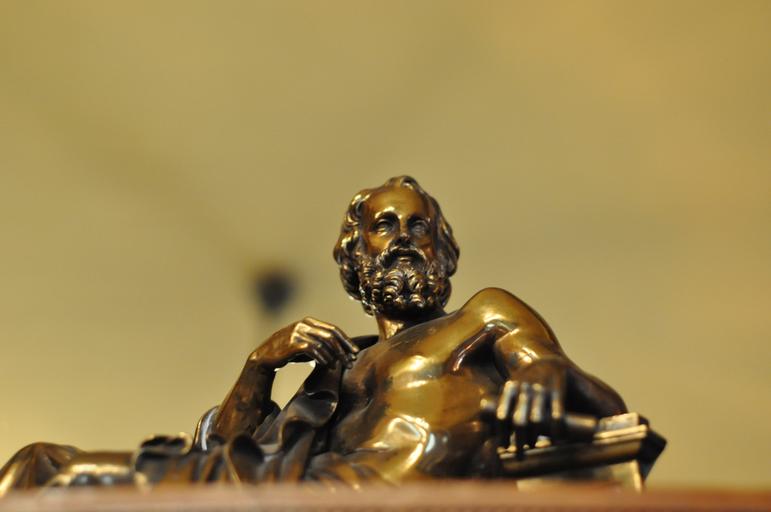
Allegory of the Cave
Plato’s “Allegory of the Cave” is one of the philosopher’s most renowned and well-known allegories. In this story, Plato describes a group of prisoners who have been chained in a cave since birth. These prisoners are only able to see the shadows on the wall in front of them and believe that these shadows are reality. One day, one of the prisoners is released from his chains and is able to see the true nature of reality for the first time. He is then faced with the task of returning to the cave to tell his fellow prisoners about what he has seen.
The allegory has been interpreted in many ways, but its central point is to show how humans can be limited by their perceptions. The prisoners in the cave are limited by what they can see, and as a result, they believe that the shadows are all there is to reality. This story has been used to illustrate the importance of philosophy and open-mindedness. It has also been critiqued for its elitist view of knowledge and its lack of technical details. Regardless of its interpretation, the “Allegory of the Cave” remains one of Plato’s most famous and influential works.
If you’re interested in learning more about this allegory, there are many resources available online and in libraries. I would encourage you to explore them so that you can form your own opinion on this classic work of philosophy.
In his Allegory of the Cave, Plato examines the nature of knowledge and reality. He argues that physical existence is merely a shadow of true reality, which can only be apprehended by the mind. This idea is summed up in his famous statement “the Form of the Good is the highest good.”
The Allegory of the Cave is a description of the journey of enlightenment, in which a person awakens to the true nature of reality. The story begins with people who have been imprisoned in a cave since birth, their only view of the world being the shadows cast by objects passing in front of a fire. They take these shadows to be reality, and they know nothing else.
One day, a prisoner is released from the cave and sees the real world for the first time. He is overwhelmed by its beauty and complexity, and he longs to share this experience with his fellow prisoners. But they do not believe him, because they cannot see what he sees. The released prisoner then tries to bring them out of the cave, but they refuse to go.
Like the prisoners in Plato’s allegory, many people are content with their ignorance and do not want to know anything beyond what they can see with their own eyes.
-

The Revival of the Philosopher King
This term has been historically applied primarily to political systems and dogmas. The origin of the “Philosopher King” is credited to Plato:
“philosophers [must] become kings…or those now called kings [must]…genuinely and adequately philosophize” (The Republic, 5.473d).
A philosopher king is a ruler who bases his decisions on wisdom and knowledge, rather than on personal gain or self-interest. Plato believed that such a ruler would be able to see beyond the illusions of physical existence and understand the true nature of reality. He would then be able to lead his people in the pursuit of truth and justice.
Critics argue that the concept of a philosopher king is unrealistic and impractical. They argue that it is impossible to find a single person who is wise enough to rule a nation. Furthermore, they argue that even if such a person were found, he would be likely to abuse his power.
A Philosopher Queen of this century is therefore a person who has excelled in or found meaning in the creative process. This creative process must be philosophically accurate in order to transform the individual first and then, by graces not fully understood, other members of the community.