
Your cart is currently empty!
Category: Da-sein Designs E-zine
When it comes to subscribing to an ezine, there are many different options to choose from. But, if you are interested in design and philosophy, then there are few better options than subscribing to Design & Da-sein E-zine that focuses specifically on these topics.
-

The Existential Transhuman

similarities between transhumanism and existentialism revealed There are a few key ways in which transhumanism and existentialism differ. For one, transhumanism is focused on using technology to improve the human condition, while existentialism is more concerned with the philosophical implications of existence itself. Additionally, transhumanists typically believe that humans can and should strive to transcend their current limitations, while existentialists may see such limitations as inherent and unavoidable parts of the human experience. Finally, transhumanists tend to be optimistic about the future potential of humanity, while existentialists are often more pessimistic about what life has to offer.
Despite these differences, there are also some significant similarities between transhumanism and existentialism. Both philosophies emphasize the importance of individual freedom and choice, for example. Additionally, both transhumanism and existentialism are concerned with the ways in which humans can create meaning in their lives. Ultimately, then, transhumanism and existentialism are two philosophies that offer different perspectives on the human condition, but which also share some important commonalities.
-

Ubuntu
Ubuntu is a philosophy that prizes community and interconnections. The Ubuntu philosophy is based on the idea that we are all connected, and that we need one another in order to thrive. Ubuntu teaches that we should put the needs of others before our own, and that by doing so, we create a community in which everyone benefits.
The Ubuntu philosophy is beneficial for modern industrial society because it teaches empathy and cooperation. By valuing community and interconnections, Ubuntu helps to create a society in which people are more likely to work together for the common good. Ubuntu also encourages people to take care of one another, which is important in a society where people are often isolated from each other.
Here are 6 things to consider:
1. What is Ubuntu and where does it come from
2. The benefits of Ubuntu for modern society
3. How Ubuntu can help to create a more compassionate world
4. Understanding and embracing Ubuntu culture
5. The history and philosophy of Ubuntu
6. Closing thoughts on Ubuntu
The Ubuntu philosophy is a traditional African belief system that emphasizes the importance of community and interdependence. The word Ubuntu comes from the Bantu language and is often translated as “humanity” or “I am because we are.” This philosophy stresses the idea that we are all connected, and that our individual well-being is inextricably linked to the well-being of our community.
The Ubuntu philosophy has a number of benefits for modern industrial society. First, Ubuntu emphasizes the importance of community cooperation and interdependence. In today’s world, it is increasingly important to work together in order to achieve success. The Ubuntu philosophy can help people to develop strong bonds with others and to work together for the common good.
Second, Ubuntu stresses the importance of taking care of one another. In a world that is often driven by self-interest, ubuntu reminds us that we are all in this together and that we need to look out for each other. This philosophy can help to create a more compassionate and caring society.
Third, ubuntu can help us to better understand and appreciate our own culture and history. The ubuntu philosophy is rooted in African culture and tradition. By understanding and embracing Ubuntu, we can gain a greater appreciation for our own heritage and the rich tapestry of cultures that make up our world. The ubuntu philosophy is a powerful force for good in the world today. By promoting cooperation, compassion, and cultural understanding, ubuntu can help us to build a better world for all.
-

Existential FUD
When it comes to making decisions, do you tend to let fear, uncertainty, and doubt (FUD) guide your choice-making process? If so, you’re not alone. In fact, research shows that FUD is one of the most powerful psychological forces influencing our behavior.
What is FUD?
FUD is an emotional state characterized by feelings of fear, uncertainty, and doubt. When we’re in a state of FUD, we’re more likely to make decisions based on emotions rather than logic. We might avoid taking risks or making changes because we’re afraid of the unknown. Or, we might make hasty decisions without fully considering all the options because we’re feeling anxious and uncertain.
Why is FUD so powerful?
FUD is so powerful because it’s rooted in our survival instinct. Our brains are hardwired to protect us from danger, and FUD is one of the mechanisms that helps us do that. When we feel afraid or uncertain, it triggers a stress response in our bodies which prepares us to fight or flee from the perceived threat.
This stress response is helpful when we’re actually in danger, but it can be detrimental when it comes to making decisions. That’s because when we’re in a state of FUD, we’re more likely to make decisions based on emotions rather than logic. We might avoid taking risks or making changes because we’re afraid of the unknown. Or, we might make hasty decisions without fully considering all the options because we’re feeling anxious and uncertain.
How can you overcome FUD?
The first step is to become aware of when you’re feeling FUD. Pay attention to your emotions and physical sensations when you’re making a decision. If you notice that you’re feeling afraid or uncertain, take a step back and remind yourself that these feelings are normal and not necessarily indicative of danger.
Once you’ve identified that you’re in a state of FUD, try to take some time to calm yourself down. Take some deep breaths, go for a walk, or do whatever else helps you relax. Once you’ve calmed yourself down, it will be easier to think more clearly and make a decision based on logic rather than emotion.
Finally, remember that making decisions is a process, and you don’t have to make a decision right away. If you’re feeling FUD, it’s okay to take some time to think things through before you make a final decision. Making decisions can be tough, but by becoming aware of FUD and taking steps to overcome it, you can make better decisions that are based on logic rather than emotion.
When it comes to making decisions, two schools of thought seem to stand out: FUD (fear, uncertainty, doubt) and existentialism. Both have their own unique way of looking at decision-making, but which one is better?
FUD is the emotional state of fear, uncertainty, and doubt. When we’re in this state, our brains are hardwired to protect us from danger by triggering a stress response. This response is helpful when we’re actually in danger, but it can be detrimental when it comes to making decisions. That’s because when we’re in a state of FUD, we’re more likely to make decisions based on emotions rather than logic. We might avoid taking risks or making changes because we’re afraid of the unknown. Or, we might make hasty decisions without fully considering all the options because we’re feeling anxious and uncertain.
Existentialism is a philosophical movement that emphasizes individual freedom and choice. It encourages people to take control of their lives and make their own decisions, even if those decisions are difficult or unpopular. Existentialists believe that humans are free beings who are capable of creating their own meaning in life.
So which one is better? FUD or existentialism? In my opinion, existentialism is better. While FUD is based on our survival instinct and can be helpful in certain situations, it often leads to hasty and irrational decisions. Existentialism, on the other hand, encourages people to think for themselves and make decisions based on their own values and beliefs. It allows for freedom and individuality, which I believe are essential for human happiness and growth.
-

Writing Philosophy for Pop Culture
Pop Culture Writing Tips for Philosophers
When it comes to writing a philosophy paper that will be read by pop culture, there are a few key things to keep in mind. First, remember that your audience is likely not familiar with academic jargon and concepts. So, make sure to explain things clearly and concisely. Second, pop culture audiences are often more interested in stories and examples than in dense theoretical arguments. As such, it can be helpful to focus on concrete examples to illustrate your points. Finally, don’t forget the basics of good writing: make sure your paper is well-organized, with a clear structure and logical flow. By following these tips, you can ensure that your philosophy paper will be accessible and enjoyable for pop culture audiences. Below are 9 key tips to keep in mind while writing philosophically oriented articles intended for General audiences.
Keeping it Short
If you want to keep your philosophy writing concise, use short sentences. This will help your reader follow your argument more easily, and it will also make your writing pop. Of course, there are times when you’ll need to use longer sentences. But in general, shorter is better. So don’t be afraid to break up your thoughts into smaller chunks. It’ll make a big difference in how readable and enjoyable your writing is.
One last idea here: when you’re editing your work, keep an eye out for any run-on sentences. These are often a sign that you could tighten up your writing by breaking the sentence into two (or more) shorter ones. So if you see a sentence that’s longer than it needs to be, don’t be afraid to break it up. It’ll make your writing all the better for it. By following this idea, you can keep your philosophy writing lucid and clear. So don’t be afraid to experiment with shorter sentences. It’ll make a big difference in the quality of your writing.
Common Phrases
If you want to make your philosophy writing more understandable to a wider audience, consider using common phrases and idioms. This will help to make your work more relatable and accessible. Here are some directions for using common phrases in your writing:
– Use contractions such as “don’t”, “can’t”, and “won’t”. These are commonly used in everyday speech and will make your writing more relatable.
– Use abbreviations such as “Mr.”, “Dr.”, and “Ms.”. These are commonly used in academic writing and will help to make your work more accessible.
– Use colloquialisms such as “gonna” and “wanna”. These are commonly used in pop culture and will help to make your work more relatable.
– Use pop culture references such as “The Simpsons”, “Harry Potter”, and “The Hunger Games”. These are commonly known and will help to make your work more relatable.
By using these tips, you can make your philosophy writing more understandable to a wider audience.
Adjectives VS Data
Data is a set of values of a particular type that are often grouped together. Adjectives are words that describe or modify another person or thing in the sentence. An adjective is a word that modifies a noun or pronoun. It typically describes the quality of the noun or pronoun. When you replace adjectives with data, you are making the sentence more specific and easier to understand. For example, “The big dog is friendly” becomes “The Labrador retriever is friendly.”
In pop culture, we often use data to make things more relatable. For example, when a character in a movie says they’re “feeling blue,” we know that they’re sad. But if they said they were “feeling 0.2 on the color wheel,” it wouldn’t have the same emotional impact. Similarly, in academic philosophy, data can be used to make complex ideas more understandable. For example, the philosopher John Rawls is known for his theory of justice. But if you replaced the word “justice” with “the distribution of resources in a society,” it would be much easier to understand what he was talking about. So, when you’re writing, try to replace adjectives with data. It will make your writing more specific and easier to understand.
Philosopher A is writing an editorial that must be understandable by pop culture. To do this, they replace adjectives with data. For example, rather than saying “This person is really smart,” they would say “This person’s IQ is 145.” Or instead of saying “I’m feeling really happy today,” they might say “My current level of serotonin is X.” Philosopher A believes that by using data, they can more accurately communicate their ideas to a wider audience. What do you think? Is this a good way to make philosophy more accessible, or does it lose something in the translation?
Sources:
https://www.thoughtco.com/what-is-data-1692430
https://www.merriam-webster.com/dictionary/adjective
Bold Words
Having trouble writing an article that will be both pop-friendly and academic? Many philosophers have the same problem. The key is to eliminate boring and weak words from your writing.
Here are some tips:
1. Use strong verbs.
2. Be concise.
3. Be specific.
4. Use active voice.
5. Avoid clichés.
By following these tips, you can write an article that is both pop-friendly and academic!
Huh?
There’s a lot of pop philosophy out there. You know the kind: big ideas, catchy phrases, and sweeping statements that make you feel deep and insightful. But have you ever stopped to ask yourself: so what? It’s a valid question, and one that we should all be asking more often. Just because something sounds profound doesn’t mean it actually is. And if we’re not careful, we can end up believing things that are actually pretty superficial. So next time you come across a piece of pop philosophy, take a step back and ask yourself: what does this actually mean? What implications does it have for my life? And most importantly, so what? You might be surprised at how often you can’t answer those questions. But that’s OK. It’s good to challenge our beliefs and think critically about the ideas we encounter. So next time you’re faced with a philosophical conundrum, don’t be afraid to ask the tough questions. After all, that’s what philosophy is all about.
Does pop philosophy provide value? That’s a tough question to answer. On the one hand, pop philosophy can be a fun way to explore big ideas and expand our horizons. It can be a great way to learn about new concepts and think about things in a new way.
But on the other hand, pop philosophy can also be pretty shallow. A lot of times, it doesn’t really go anywhere. It’s just a lot of empty talk without any real substance. And in the end, it doesn’t really provide much value.
So what do you think? Does pop philosophy provide value? Or is it mostly just hot air?
Add and Subtract Verbs
When writing for pop culture, it is important to avoid adverbs. Adverbs are words that modify verbs, adjectives, or other adverbs. They can change the meaning of a sentence, and make it difficult to understand what is being said. For example, consider the sentence: “He slowly walked across the room.” The adverb “slowly” modifies the verb “walked.” It changes the meaning of the sentence and makes it clear that the subject is moving slowly. Now, consider the sentence: “He quickly ran across the room.” The adverb “quickly” modifies the verb “ran.” It changes the meaning of the sentence and makes it clear that the subject is moving quickly. Adverbs can be helpful in academic writing, but they should be used sparingly in pop culture writing. When in doubt, leave them out. Your readers will thank you.
Objectivity in Pop
Objectivity refers to the state of being unbiased. When you are objective, you do not allow your personal opinions to interfere with your writing. Instead, you focus on presenting the facts in an accurate and unbiased way. This can be difficult, but it is important to remain impartial when writing about or for pop culture. This means avoiding any partisan bias or personal opinion. Instead, focus on presenting the facts in an unbiased way. One of the best ways to ensure your writing is objective is to familiarize yourself with the different schools of thought within pop philosophy. By understanding the different perspectives, you will be able to more accurately depict all sides of an issue. In addition, remember to use proper grammar and avoid any informal language. Although pop culture writing is meant to be accessible to a wide audience, it is still important to maintain a level of professionalism. By following these tips, you can ensure that your pop culture writing is both informative and objective.
Acronyms or Jargon
When you’re writing, it’s important to be relatable and appealing. This means avoiding the use of acronyms or jargon. Both can be confusing for your reader and cause them to lose interest in what you’re saying. Acronyms are abbreviations that are made up of the initial letters of a series of words. They can be useful in certain contexts, but in general, they should be avoided in academic writing. Jargon is a type of language that is specific to a particular field or profession. It is often used to make complex ideas more accessible to those who are familiar with the subject matter. However, jargon can also be exclusionary and difficult to understand for those who are not experts in the field.
Some examples of philosophical acronyms are:
– SOP (standard operating procedure)
– IAC (in any case)
– PAP (principle of alternative possibilities)
Some examples of philosophical jargon include:
– ontology
– epistemology
– axiology
– phenomenology
– transcendental idealism
SVO Convention in Philosophy Copy
When it comes to writing, there is no one right way to do things. However, there are certain conventions that are generally accepted as being of good practices. One of these is the use of subject-verb-object (SVO) structure in sentences. The subject-verb-object structure is simply a way of ordering the elements of a sentence so that the subject (the thing or person doing the action) comes first, followed by the verb (the action being done), and then the object (the thing or person on which the action is being done). For example:
The cat chased the mouse.
In this sentence, “cat” is the subject, “chased” is the verb, and “mouse” is the object.
This may seem like a very simple and obvious thing, but you’d be surprised at how often people don’t use SVO structure in their writing. In fact, it’s one of the most common mistakes that non-native English speakers make.
There are several reasons why it’s important to use SVO structure in your writing. First of all, it makes your meaning clear. When you put the subject first, followed by the verb, there is no ambiguity about who or what is doing the action. Secondly, it makes your writing sound more natural and native-like. This is because SVO is the most common way to order elements in a sentence in English. So next time you’re writing, make sure to use SVO structure in your sentences. It will make your meaning clearer and your writing sound more natural.
Conclusions
If you’re a philosopher, becoming a better writer is a great way to expand your skill set. Not only will it help you communicate your ideas more clearly, but it can also make you more marketable in the job market. There are a few different areas where pop philosophy and academic philosophy intersect. For example, both types of philosophy rely heavily on argumentation and critical thinking. As such, honing your writing skills can help you in both areas. In addition, many employers value strong writing skills. If you’re looking to enter or advance in the corporate world, being a great writer can give you a significant leg up.
Finally, grammar is important! This may seem like an obvious point, but it bears repeating. If you want to be taken seriously as a philosopher, it’s important to use proper grammar and punctuation in your writing. While there are always exceptions to the rule, in general, taking the time to ensure that your writing is clear and error-free will go a long way in making a good impression on potential employers or readers. So, if you’re a philosopher who’s looking to improve your skill set, becoming a better writer is a great place to start. By honing your writing skills, you’ll be able to communicate your ideas more clearly and effectively, and you may also find yourself with more job opportunities. So what are you waiting for? Start writing!
-

Straw Man
A straw man is a logical fallacy that occurs when an opponent’s argument is misrepresented in order to be more easily attacked or refuted. The straw man fallacy is often used in political debates and in other heated arguments. The straw man fallacy gets its name from the fact that it is easier to knock down a straw man than it is to knock down a real person. When someone uses the straw man fallacy, they are creating a false version of their opponent’s argument in order to make it easier to attack.
The straw man fallacy is also sometimes called the “false dilemma” or the “false dichotomy.” This is because the straw man argument often presents two options as if they are the only possible options when in reality there are other options. For example, imagine that you are trying to decide whether or not to buy a new car. Your friend argues against buying the car, saying “You don’t need a new car, your old car is just fine.” This is an example of the straw man fallacy. Your friend has created a false dichotomy by presenting only two options: buying a new car or keeping your old car. In reality, there are other options, such as leasing a car, borrowing a car, or taking public transportation.
The straw man fallacy is a type of false argument that can be difficult to spot. The straw man fallacy is also sometimes used in political debates. For example, imagine that two candidates are debating the issue of taxation. Candidate A says “We need to raise taxes on the wealthy in order to provide more funding for education and social programs.” Candidate B responds by saying “Candidate A wants to raise taxes on hard-working families.” This is a straw man argument, because Candidate B has misrepresented Candidate A’s position.
The straw man fallacy is a type of false argument, and it can be hard to spot. However, there are a few things that you can look for that may help you identify a straw man argument:
– The arguer attacks a different position than the one that their opponent holds.
– The arguer presents their opponent’s position as if it is the only possible position.
– The arguer straw man argument may be based on a misunderstanding or misrepresentation of their opponent’s position.
If you think that you may have been the victim of a straw man argument, there are a few things that you can do:
– Ask the person who made the argument to clarify their position.
– Point out the straw man argument and explain why it is not a valid argument.
– Present your own argument in response to the straw man argument.
In debates with both men and women, one common way to argue is to use a straw man argument. This is when you misrepresent your opponent’s argument and then attack that misrepresentation. For example, imagine that I am arguing in favor of increasing the minimum wage. My opponent might argue that this will lead to businesses closing and unemployment rates increasing. I could respond by arguing that my opponent is actually arguing against increasing the minimum wage, which is not what they are saying at all. This would be a straw man argument.
The straw man fallacy can be a very effective way to win an argument. After all, it’s much easier to attack an easy target than it is to defend an actual argument. However, it’s also a very dishonest way to argue and it’s not likely to convince anyone who isn’t already on your side.
More on What the Straw Man logical Fallacy is
The straw man fallacy is a type of informal fallacy that occurs when an opponent’s argument is misrepresented in order to make it easier to attack. The straw man fallacy gets its name from the fact that it is often used to create a “straw man” version of an opponent’s argument, one that is weaker and easier to defeat than the real argument.
The straw man fallacy is a common tactic in political debates, as well as in everyday arguments. It can be difficult to spot, because it often takes the form of legitimate criticism of an opponent’s position. However, if you are able to identify the straw man fallacy, you can avoid being misled by it.
What are some examples of the straw man fallacy?
One classic example of the straw man fallacy is the following:
Person A: I think that abortion should be legal in all cases.
Person B: But what about all the innocent babies that would be killed? That’s murder!
In this example, Person B is straw manning Person A’s position by misrepresenting it as being in favor of murder. This is a straw man fallacy because it is not an accurate representation of Person A’s position.
Another example of the straw man fallacy is the following:
Person A: I think that school uniforms are a good idea.
Person B: But you’re just trying to control kids! You want them all to look the same!
In this example, Person B is straw manning Person A’s position by misrepresenting it as being in favor of conformity. This is a straw man fallacy because it is not an accurate representation of Person A’s position.
The straw man fallacy is a common tactic in political debates. For example, during the 2016 U.S. presidential election, then-candidate Donald Trump straw manned his opponent Hillary Clinton’s position on gun control by claiming that she wanted to abolish the Second Amendment. This was a straw man fallacy because Clinton’s actual position was not to abolish the Second Amendment but to enact certain gun control measures.
How can you avoid being misled by the straw man fallacy?
The best way to avoid being misled by the straw man fallacy is to be aware of it and to pay close attention to how your opponents represent your position. If you think that your opponent may be straw-manning your position, you can ask them to clarify their criticism.
You can also avoid the straw man fallacy yourself by making sure that you accurately represent your opponents’ positions. When you are critiquing an opponent’s argument, make sure that you are attacking their actual position, not a straw man version of it.
-

Da-sein
The term “existentialism” was first coined by Gabriel Marcel in the 1940s. existentialism became popularized by Jean-Paul Sartre in the 1950s. Other notable existential philosophers include Friedrich Nietzsche, Martin Heidegger, Karl Jaspers, and Gabriel Marcel.
Existentialists often focus on topics such as death, freedom, and the human condition. They believe that it is our responsibility to create our own lives, and to find our own meaning in existence.
One of the most important concepts in existentialism is da-sein, which is a German word meaning “being there” or “existence.” This concept emphasizes our individual existence, and the unique perspective that each of us has on the world.
Existentialism is a complex and challenging philosophical movement that has had a significant impact on literature, art, and philosophy. It is worth studying if you are interested in exploring different ways of thinking about life, freedom, and human nature.
Da-sein is often used to refer to the human condition, as it highlights our mortality and the fact that we are all ultimately responsible for our own lives. This can be a difficult concept to accept, as it means that we cannot rely on anyone else to provide meaning or purpose in our lives. Instead, we must create our own meaning and purpose.
This may seem like a daunting task, but it is also liberating. Once we realize that we are responsible for our own lives, we can do anything we want with them. We are no longer bound by the expectations of others, or by society’s rules and conventions. We can be our own person, and live our lives in the way that we see fit.
Da-sein is a powerful concept that can help us to understand and accept the human condition. It reminds us that we are all responsible for our own lives, and that we have the freedom to live them in any way we choose. Da-sein is an important part of existentialism, and it is a concept that everyone should try to understand.
-
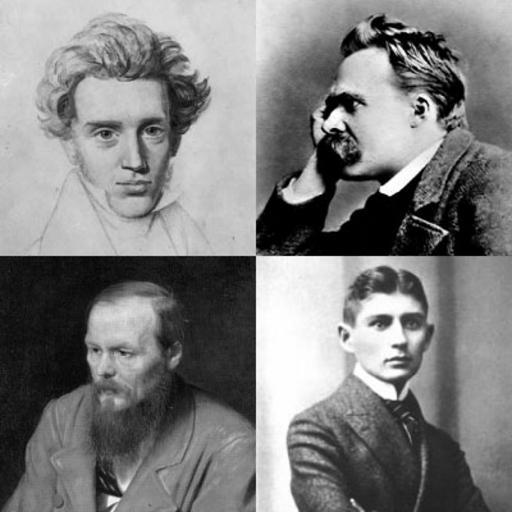
Existentialists: The Top Five
Some thinkers posit that there are five primary existential philosophers: Jean-Paul Sartre, Friedrich Nietzsche, Martin Heidegger, Karl Jaspers, and Gabriel Marcel. Their books explore different aspects of existentialism, and offer different perspectives on this unique philosophical movement.
Jean-Paul Sartre was a French philosopher who is considered to be the founder of existentialism. His book, “Existentialism is a Humanism”, explores the central concepts of existentialism, and argues that existentialists are humanists because they believe in the inherent potential of humans to create their own meaning in life.
Friedrich Nietzsche was a German philosopher who was highly influential in the development of existentialism. His book, “The Birth of Tragedy”, explores the concept of the Dionysian, which refers to the power of the creative artist to confront the meaninglessness of life and to affirm life in spite of it.
Martin Heidegger was a German philosopher who was highly influential in the development of existentialism. His book, “Being and Time”, is considered to be one of the most important existentialist texts. It explores the concept of Da-sein, which refers to being-in-the-world. Heidegger argues that Da-sein is always situated within its context, and that it is impossible to divorce oneself from one’s surroundings.
Karl Jaspers was a German philosopher who was highly influential in the development of existentialism. His book, “Philosophy: An Introduction”, provides an overview of existentialist thought, and discusses how existentialists approach philosophical problems.
Gabriel Marcel was a French philosopher who was highly influenced by existentialism. His book, “The Mystery of Being”, discusses different aspects of existential thought, including freedom, being, time, and others.
-
Existentialism as Discourse
Existentialism is a philosophical discourse that emphasizes individual freedom and choice, and the inherent meaninglessness of life. Existentialists believe that humans must create their own values and meanings in order to live purposeful lives.
Some of the most famous existential philosophers include Jean-Paul Sartre, Friedrich Nietzsche, Martin Heidegger, and existential psychiatrist Viktor Frankl.
Sartre’s seminal work Being and Nothingness explores the nature of human existence and the idea that humans are responsible for creating their own meanings in life. In contrast, Nietzsche’s work Thus Spoke Zarathustra posits that life is ultimately meaningless and that individuals should embrace nihilism as a way of living authentically. Heidegger’s work Being and Time examines the relationship between humans and their environment, and how this relationship shapes our understanding of existence. Finally, Frankl’s book Man’s Search for Meaning explores the idea that meaning can be found in even the most difficult of life circumstances.
Friedrich Nietzsche was a German philosopher who lived from 1844-1900. He is considered one of the most influential existentialists, and is best known for his work Thus Spoke Zarathustra. In this work, Nietzsche promotes the idea of “Living life as if it were your last day.” He argues that individuals should embrace nihilism in order to live authentically and without regret.
Here is more information on the other key Existentialists:
1. Heidegger was a German existential philosopher who wrote extensively on the nature of existence and the human relationship to the environment.
2. His most famous work, Being and Time, examines the ways in which humans understand their own existence.
3. Heidegger was heavily influenced by the work of Kierkegaard and Nietzsche, and he sought to create a synthesis of their ideas.
4. Heidegger was a Nazi sympathizer during World War II, and he was later accused of participating in the Holocaust.
1. Jean-Paul Sartre was a French existentialist philosopher who wrote extensively on the nature of existence and the human condition.
2. Sartre is considered one of the most important existential thinkers, and his work has been highly influential in subsequent philosophical discourse.
3. Sartre’s most famous work, Being and Nothingness, explores the idea that humans are responsible for creating their own values and meanings in life.
4. Sartre was a vocal opponent of existential nihilism, and he argued that humans have an inherent need to find meaning in life.
1. Viktor Frankl was an existential psychiatrist who wrote extensively on the human need for meaning.
2. Frankl’s most famous work, Man’s Search for Meaning, explores the various ways in which humans find meaning in life.
3. Frankl was a Holocaust survivor, and he drew on his experiences during the Holocaust to write about the human need for meaning.
4. Frankl was the founder of logotherapy, which is a form of existential therapy that focuses on the search for meaning in life.
Viktor Frankl, who was a Holocaust survivor and drew on his experiences during the Holocaust to write about the human need for meaning, suggested that Logotherapy is based on the idea that humans are motivated by a need to find meaning in their lives, and that this need is essential for psychological well-being.
Critics of existentialism argue that existentialism is a pessimistic philosophy that leads to a sense of despair and hopelessness. However, proponents of existentialism argue that existentialism can be a liberating philosophy that allows individuals to confront the existential challenges of life.
***
Standard benefits of Logotherapy:
– Helps individuals find meaning in life
– Offers a new perspective on existential problems
– Addresses the root cause of psychological problems
Emotional benefits:
– Leads to self-awareness and self-acceptance
– Encourages growth and change
– Promotes inner peace and happiness
-

Transhumanist Philosopher King
Plato’s philosopher king is a ruler who bases his decisions on wisdom and knowledge, rather than on personal gain or self-interest. He is able to see beyond the illusions of physical existence and understand the true nature of reality.
Transhumanism is a movement that seeks to use technology to transcend the limitations of human biology. Transhumanists believe that it is possible to merge human biology with technology in order to create a new form of life that is superior to traditional humans.
Critics argue that the concept of transhumanism is unrealistic and impractical. They argue that it is impossible to create a new form of life that is superior to traditional humans. Furthermore, they argue that even if such a thing were possible, it would be dangerous and unethical.
Some transhumanists believe that the philosopher king described by Plato could be created through technology. They believe that by using technology to merge human biology with artificial intelligence, it would be possible to create a being that is wiser and more intelligent than any human. Furthermore, they believe that such a being would be able to rule over humans in a just and wise manner.
Critics argue that the concept of a transhumanist philosopher king is even more unrealistic and impractical than the traditional concept of a philosopher king. They argue that it is not only impossible to create such a being, but also unethical. They argue that any attempt to create a being that is superior to humans would likely result in disaster.
The idea of a philosopher king has been criticized as being unrealistic and impractical. However, the concept of a transhumanist philosopher king is even more far-fetched. The idea of using technology to create a being that is wiser and more intelligent than any human is not only impossible, but also unethical. Any attempt to create such a being would likely result in disaster.