
Your cart is currently empty!
Author: Patrick Seely
-

AI Stack Development

AI is rapidly becoming the unstoppable breakthrough formula for technical professionals. With the help of AI, technical personnel can now visualize and interact with technical data in ways that were not previously possible. The ability to access real-time updates from a remote location, as well as analyzing large amounts of data quickly and accurately are just two of the many advantages that AI offers technical professionals. At Majestic Vision, we are committed to creating technical solutions that enable technical personnel to reach their full potential. We believe in the power of AI and are proud to offer technical professionals an intuitive platform that is designed specifically with them in mind. Together, let’s make technical excellence more accessible than ever before! The world of technical professionals is rapidly changing; technology has enabled us to work smarter and faster than ever before. For decades, technical personnel have relied on outdated tools for performing complex tasks such as data analysis or system maintenance. However, with the emergence of Augmented Reality (AR), technical personnel can now perform these tasks with unprecedented speed and accuracy thanks to its interactive 3D visualizations Generative AI as opposed to AI
Generative AI is a type of Artificial Intelligence (AI) that is focused on creating new content from scratch. Unlike traditional AI, which focuses on using existing data to answer questions or solve problems, Generative AI can create technical content and imagery without the need for human input. This technology enables computers to learn from past experiences and generate new output based on what it has learned. Generative AI has the potential to revolutionize how businesses create technical content and imagery, drastically reducing time and cost associated with manual labor. By leveraging generative technologies, businesses can quickly prototype products, services, and applications in order to gain valuable insights into customer demand. Additionally, Generative AI can be used to develop predictive models that accurately anticipate customer needs or market trends. In short, Generative AI is a powerful tool for businesses to create technical content and imagery with minimal effort.
Stack Ideas for your Creative Workflows
DALL·E 2 is an AI-based creative tool developed by OpenAI that is capable of generating lifelike images from text descriptions. It is based on a Generative Pre-trained Transformer 3 (GPT-3) model and uses natural language processing to interpret the user’s input. By combining the power of GPT-3 with powerful image recognition algorithms, DALL·E 2 can generate technical content and imagery like never before. This technology has been used to produce impressive results such as highly realistic paintings, photorealistic animations, and interactive virtual environments.
Midjourney is another AI-based platform created by Adobe that enables users to create technical content and imagery in an intuitive manner. Midjourney integrates machine learning approaches such as generative neural networks and deep learning algorithms to enable users to quickly create visually appealing graphics. The platform also offers users a variety of customizable tools that allow them to quickly generate technical visuals for websites, mobile applications, and more.
BariumAI is a cloud-based AI platform designed for digital asset management (DAM). This platform allows users to store technical assets such as technical documents, images, videos, audio files, and more in a secure cloud environment. Additionally, BariumAI provides users with intelligent search capabilities that leverage deep learning algorithms to quickly locate technical content and imagery within the system.
Finally, D-ID AI is an AI-powered facial recognition tool that can be used for authentication purposes. The software utilizes both deep learning algorithms and image recognition algorithms in order to accurately identify faces in photos or videos. D-ID AI helps businesses improve their security measures by providing access control without requiring physical identification documents or passwords.
WebAR and AI
WebAR, or Web-based Augmented Reality, is a technology that allows users to view and interact with digital content in the real world. By using the latest advancements in web-connected 3D graphics, WebAR can render virtual objects directly onto a real-world environment using your device’s camera.
Using this technology, users can experience augmented reality (AR) on the web without having to download a dedicated app. This is especially useful for technical applications such as training and technical instruction, where users can view complex technical information from an AR interface. For instance, technical instructions could be displayed in an AR overlay on top of an object being worked on.
WebAR also has potential applications beyond technical use cases as it offers a more immersive way of interacting with websites and webpages. With WebAR, businesses can create unique experiences for their customers by displaying information about their products in 3D on a webpage or through a browser window. Additionally, developers could use 3D models and animations to bring technical interfaces to life, allowing users to explore technical data more easily and intuitively than before.
WebAR enables manufacturers to showcase technical products in 3D without requiring users to download any new software or hardware; all they need is an internet connection and a compatible device. This allows businesses to quickly reach new audiences with technical content and imagery without needing to spend time developing native apps or hardware solutions.
Use Case Examples
Augmented Reality (AR) is quickly becoming a powerful technology in technical applications. AR can be used to provide technical instruction and training in a more immersive way and allows users to explore technical data more easily and intuitively than before.
For example, AR can be used for technical product design such as automotive components or medical implants. With the help of 3D models, technical professionals are able to view the design from any angle and interact with it in real-time inside of their own environment. Furthermore, 3D visualizations of technical data can be displayed directly onto physical objects, allowing technical professionals to work with higher accuracy and efficiency.
In manufacturing, AR can enable workers to access technical instructions for each component on the assembly line without having to refer to paper manuals or consult an expert. This type of application helps reduce manual errors while increasing productivity at the same time. Additionally, manufacturers are able to visualize technical processes such as part selection or inspection in an interactive manner through augmented reality.
The potential applications of AR don’t stop there; businesses can create unique experiences for customers by displaying technical information about their products in 3D on a webpage or through a browser window. This type of experience eliminates the need for users to download any additional software or hardware; all they need is an internet connection and a compatible device. This allows businesses to quickly reach new audiences with technical content and imagery without needing to spend time developing native apps or hardware solutions.
Technical professionals are now able to access real-time updates on complex systems including power grids or communication networks using an Augmented Reality interface. By providing remote access and visualization of these systems, the technical personnel are able to perform maintenance and repairs faster while reducing costly downtime at the same time.
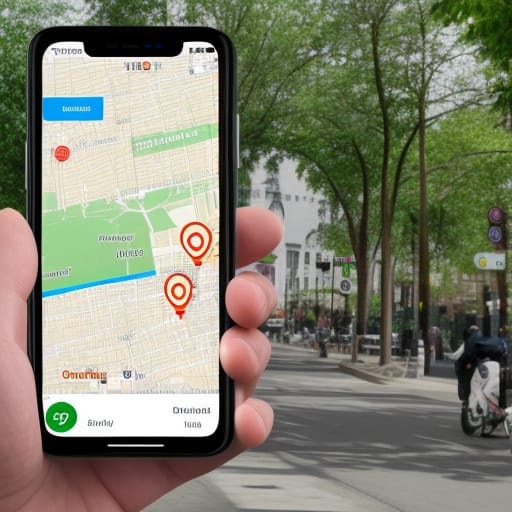
Augmented Reality (AR) is becoming increasingly popular in map applications, allowing users to explore their environment with a more immersive and interactive experience. AR can be used to create 3D maps that display detailed information about an area such as points of interest, landmarks, and other features. With the help of 3D models, users can view these features from any angle and interact with them in real-time inside of their own environment.
AR-Enabled Maps
Moreover, AR-enabled maps can verify data accuracy by using geolocation technology to accurately display the user’s position and orientation on the map at any given moment. This feature can be particularly useful for navigation purposes or when searching for a specific location or landmark. Additionally, AR-enabled maps can provide contextual information about each point of interest such as opening hours, contact details, reviews, or ratings.
Furthermore, businesses are able to use AR-enabled maps to guide customers step-by-step towards their stores or other locations. This type of application helps reduce manual errors while increasing productivity at the same time; customers are able to find businesses quickly and easily without having to consult multiple sources. Furthermore, they are able to access technical instructions on how to reach places directly inside their own environment without having to refer to paper manuals or consult an expert.
AR-enabled maps also have potential applications beyond navigational use cases as they offer a more immersive way of interacting with webpages and websites. With AR Maps businesses can create unique experiences for their customers by displaying technical information about their products in 3D on a webpage or through a browser window. Additionally, developers could use 3D models and animations to bring technical interfaces to life when exploring technical data more easily and intuitively than before.
Business owners are able to take advantage of real-time updates on complex systems including power grids or communication networks using an Augmented Reality interface for better mapping results in areas with limited infrastructure support such as rural locations. By providing remote access and visualization of these systems technical personnel are able to perform maintenance and repairs faster while reducing costly downtime at the same time.
Overall, Augmented Reality is transforming how we interact with technical content and imagery like never before. Whether it’s used for product design, manufacturing procedures, customer experiences, or system maintenance; AR has become an invaluable tool for technical professionals around the world that promises many more revolutionary use cases in the years ahead.
About Us
Majestic Vision is a design studio that puts technical professionals first. At Majestic Vision, we believe that technical professionals should have the tools they need to be successful while creating beautiful and accessible designs. We strive to provide technical professionals with an interface that is intuitive, easy to use, and allows them to work faster without overcomplicating the design process.
Our philosophy of design is rooted in our commitment to technical excellence; we want technical professionals to have access to the best tools available at their fingertips, so they can focus on what matters most: creating meaningful work.
At Majestic Vision, technical professionals are provided with essential features such as real-time data updates, 3D map visualizations, AR-enabled maps for navigating from point A to point B with ease, and step-by-step instructions for tasks like maintenance and repairs. By utilizing cutting-edge technologies like Augmented Reality (AR) and Virtual Reality (VR), the technical personnel are able to create immersive environments that bring their technical data to life in an aesthetically pleasing way.
We also understand the importance of allowing technical personnel to be creative in their craft; so, we provide them with a suite of intuitive tools such as drag-and-drop editors, advanced drawing tools, and layers-based workflow which allow them to customize their designs as needed. Additionally, our team of experts is always available for support when technical personnel encounters any issues or roadblocks throughout their projects.
Ultimately, at Majestic Vision, our goal is simple: make technical expertise more accessible through innovative technology solutions. Our vision is clear: bring technical professionals together under one roof and provide them with the means necessary for success while enabling creativity at every turn. With us by your side, you can rest assured that your projects will have the technical skill set required for success!
-

Creating Ads and Media That Are Evergreen: The Importance of Marketing and Branding
Evergreen Branding
Creating evergreen ads that remain relevant over time is a challenging yet important task for marketing professionals. Doing so helps to ensure that a brand is consistently visible, building an audience and carving out a distinct position in the marketplace, and cultivating loyalty from existing customers. It also allows brands to remain relevant in the face of changing trends while still connecting with their target audience.
Marketing plays an integral role in creating evergreen advertisements, particularly when it comes to developing strategies to reach potential consumers. Marketers can identify who their ideal customer is, what they value, and how they prefer to engage with a brand or product. Additionally, they can pinpoint the most effective channels to reach those people. This could include digital platforms like websites, digital media campaigns, email campaigns, or even physical billboards and other traditional forms of advertising. Brands can then tailor their campaigns accordingly in order to be more effective in communicating their message.

Majestic Vision provides invaluable assistance when it comes to creating an ads library – offering strategic guidance as well as expert advice throughout the entire process so that clients have everything they need in order to maximize ROI on all their creative efforts over time! Whether you’re just getting started or looking for ways to improve existing content libraries, Majestic Vision has your back every step of the way! The same principles apply to branding efforts – companies should consider how best to showcase themselves through various elements such as logo design, colors, fonts, tone of voice, visuals, and graphics. All of these elements come together to form a complete brand identity that will appeal to its desired demographic and send the right message about what the company stands for. When executed properly, this approach can help create evergreen ads that will remain effective long into the future.
It’s also important for marketers to have an understanding of current trends so they can use them effectively within their evergreen campaigns without diminishing the strength of their message over time. For instance, certain hashtags may become popular overnight but quickly lose relevance afterward if not applied correctly – marketers should be aware of this risk and adjust their strategy accordingly if they want an advertisement’s impact to continue beyond any initial buzz it may generate. Similarly, understanding which mediums are currently being used by target audiences will help ensure that companies reach them in meaningful ways without sacrificing creativity or originality.
Both Seasonal and Evergreen
Creating ads and marketing materials that are both seasonal and evergreen is a great way for companies to stay ahead of the curve, allowing them to capitalize on trends while still maintaining a strong connection with their target audience over time. For example, a company might create an advertisement for the holiday season but also update it slightly each year so that it remains relevant. This could involve changing the visuals or tone of voice, or featuring a celebrity or product update.
Another approach is to incorporate current trends into an evergreen message in order to keep it timely and engaging. Companies can do this by using popular hashtags in their visuals or writing about topics that are currently trending in their industry. Doing so allows them to speak directly to their customers in a language they can identify with, while still communicating the same core message year after year. Additionally, incorporating seasonal elements such as colors, imagery, music, and language allows brands to evoke emotions that will resonate with their desired demographic at any given moment.
It’s important for companies to remain mindful of potential pitfalls when creating both seasonal and evergreen campaigns as well – such as relying too heavily on current trends which may be forgotten or losing relevance shortly afterward. If done improperly, this can lead to an ad campaign feeling stale or outdated just months after launch. To avoid this problem, companies should strive to keep their messaging fresh and relevant while also making sure each element is carefully considered before implementation. They should also ensure they are gathering meaningful data from their campaigns in order to measure success over time and adjust their efforts accordingly if needed.
Ultimately, creating ads and marketing materials that are both seasonal and evergreen helps provide brands with more visibility over time while still striking a chord with consumers at any given moment. It requires careful consideration of current trends alongside creative concepts that have staying power – but if done correctly it can be an invaluable asset for any organization’s long-term success!
Overall, creating ads that are evergreen requires both strategic planning on behalf of marketers as well as creativity in order to select messages that will resonate with consumers over time without becoming stale or irrelevant in the future. It’s also important for businesses to invest resources into understanding consumer behavior so that they know how best to reach them with targeted messages across different mediums while staying true to their core values and mission throughout all their marketing efforts. Doing so ensures brands remain top-of-mind throughout changing trends while still effectively engaging consumers both now and far into the future.
Ad Campaign Library
Saving ad campaigns and creating an ad library is an effective way for companies to maximize their impact over time while also staying up-to-date on current trends. By archiving successful campaigns and their associated assets, companies can easily repurpose existing materials that have been proven to work well with their target audiences – giving them the flexibility to quickly create new content without having to start from scratch. Additionally, maintaining an archive of past campaigns allows marketers to more easily keep track of which strategies are working best over time and make changes accordingly.
Creating an ad library should be done in a strategic way that allows companies to easily access the materials they need at any given moment. This could involve organizing campaigns into categories based on their purpose, such as “brand awareness” or “product launch” or “by seasonality” if applicable. Additionally, it’s important for brands to include all relevant assets for each campaign so that they can be accessed quickly and efficiently when needed – including visuals, copywriting, audio files, videos, and any other materials used in production.
It’s also important for companies to implement a system of tracking when ad campaigns were last used so that they can plan ahead and ensure they don’t use the same material too often or become outdated over time. Doing this requires keeping detailed records of each campaign’s usage history as well as its performance metrics so that teams have the data necessary to make informed decisions about how best to rotate through different materials in order to maximize effectiveness.
Overall, having an ad library can help brands save time and resources by leveraging existing content rather than starting from scratch – allowing them to stay ahead of the competition while still producing quality materials that resonate with their target audiences. It provides teams with comprehensive insight into what works best for them over time while also giving them the flexibility to adjust strategies as needed in order to stay up-to-date with current trends and ensure maximum ROI from all their creative efforts!
Ad Library Development Services
Creating an ads library is a complex process that requires a well-thought-out strategy and careful execution. For those who are looking for assistance in developing their own library, Majestic Vision is the perfect partner. The company offers comprehensive services that cover everything from initial concept development to asset management and archive maintenance.
At Majestic Vision, it all starts with creating an effective ad library that can be used throughout the year and beyond. The team of experts takes the time to understand clients’ goals and objectives over time so they can craft customized strategies that meet their needs while also staying true to their values and mission statement. This includes conducting research into current trends, understanding consumer behavior, and crafting engaging messages that will resonate with them now and into the future.
The next step is actually building the ads library itself, which requires organizing campaigns into categories based on their purpose as well as archiving all relevant assets such as visuals, copywriting, audio files, videos, etc. To ensure maximum effectiveness over time, Majestic Vision also helps clients track when each campaign was last used and it’s performance metrics so teams can adjust accordingly going forward.
Finally, once this process has been completed Majestic Vision assists with managing the entire archive of assets – helping businesses save time by quickly accessing materials when needed rather than having to start from scratch each time they need something new or updated. This allows them to remain agile within changing market trends while still producing quality materials in order to capture more attention from consumers at any given moment!
Majestic Vision provides invaluable assistance when it comes to creating an ads library – offering strategic guidance as well as expert advice throughout the entire process so that clients have everything they need in order to maximize ROI on all their creative efforts over time! Whether you’re just getting started or looking for ways to improve existing content libraries, Majestic Vision has your back every step of the way!
-

Chat GPT as a Business Tool
Chat GPT can be used to help solve specific business problems in a number of ways. For example, machine learning algorithms can be used to analyze customer data and generate insights about what customers are looking for from a product or service. These insights can then be used to develop personalized products or services that better meet the needs of customers. Additionally, Chat GPT models can also be trained on existing websites and web services in order to better understand how different elements should fit together to create an intuitive user experience. This helps ensure that websites or services created with these models are easy for users to navigate and understand, resulting in higher engagement rates and overall satisfaction levels.
Moreover, Chat GPT models can also assist with the development of marketing campaigns by accurately predicting customer behavior based on their past interactions with products or services. By understanding what motivates customers, organizations can craft more targeted campaigns that will reach the right audience at the right time and result in higher conversion rates. Additionally, Chat GPT models can also detect any potential issues within a marketing campaign before it goes live, allowing organizations to address them quickly while still ensuring accuracy in their promotional materials and messages.
Chat GPT models are also capable of providing insight into customer sentiment by taking into account both explicit feedback (such as surveys) as well as implicit signals (such as page visits). This helps ensure that organizations have an accurate understanding of how customers feel about a product or service which can aid in making strategic decisions about where resources should be allocated for future growth initiatives. By leveraging machine learning algorithms to analyze customer data sets, businesses are able to gain actionable insights into what works best for their products and services while still being able to customize results according to their specific needs and requirements.

In today’s world, Artificial Intelligence (AI) is increasingly being used to create life-like robots that are designed to interact with humans in various scenarios. This technology has the potential to establish an emotional connection between AI and its audience. Through sophisticated facial expressions and body language, programmed into the robotic figures, AI can mimic human behaviors convincingly enough to make it appear personable. By understanding emotions in spoken language, AI can also respond appropriately – making it easier for people to interact with them without feeling intimidated or overwhelmed. One way of establishing this emotional connection is through voice recognition technology. Voice recognition software can not only understand what people say but can also recognize the emotion behind their words. For example, if someone says something sarcastically or angrily then the AI may be able to detect the emotion and adjust its response accordingly. This allows AI to have a more natural conversation with humans, making it easier for people to form connections with them over time. Another way of creating an emotional bond between AI and its audience is through deep learning algorithms which allow robots to identify patterns in data sets and use them as rules for decision-making rather than following explicit instructions provided by engineers or programmers. By allowing robots to think for themselves and make decisions autonomously, they can take on a certain level of independence which gives them personality – allowing humans to form an emotional bond with them over time as they become more familiar with each other’s behavior. Finally, facial recognition software is another tool that could be used by AI systems in order to establish an emotional connection with their audience. By recognizing human facial expressions such as smiling or frowning, AI programs could understand when people are happy or sad and respond accordingly – making interactions more interactive and personable. Furthermore, using advanced robotics technology could help create life-like machines that look almost indistinguishable from real people – further increasing the chance of forming strong relationships between machines and humans in both personal and professional contexts. There are numerous ways through which Artificial Intelligence could establish an emotional connection with its audience by incorporating sophisticated technologies like facial recognition software and deep learning algorithms into its programming structures. By doing so, robots will become more personable while still being capable of completing tasks accurately and with precision – creating a harmonious relationship between man and machine going forward! Chat GPT provides companies with powerful tools capable of helping them solve specific business problems quickly and efficiently by leveraging advanced machine learning algorithms which analyze data sets in order to generate insights about what customers are looking for from their products or services. Furthermore, these models are also capable of detecting potential errors within designs before they go live which further reduces production timescales while still ensuring accuracy amongst all outputs generated by the model. As such, Chat GPT is becoming increasingly popular amongst companies looking for fast yet reliable solutions when it comes to solving complex business challenges related to customer analysis, marketing campaigns and overall sentiment detection regarding their offerings.
Chat GPT’s Statistical Analysis of Data
Chat GPT is also highly efficient when it comes to statistical verification of information. Machine learning algorithms can examine large data sets in order to determine the accuracy and validity of a given statement or assertion. By leveraging these algorithms, companies can ensure that the information they are providing to their customers or stakeholders is accurate and reliable.
In addition, Chat GPT models are capable of detecting patterns within data sets which may indicate potential errors or inaccuracies. For instance, if a company is analyzing customer feedback for a product or service, Chat GPT models can detect any issues with customer sentiment regarding a specific feature or component. This helps reduce the amount of time a team would need to spend manually verifying each piece of feedback and allows them to quickly identify any areas that need improvement.
Chat GPT models can also be used to verify information from external sources such as third-party websites or APIs. In this way, organizations can quickly check whether the information provided by these sources is accurate and up-to-date before using it in their own products and services. This ensures that customers have access to reliable information which further enhances the trustworthiness in the organization’s offerings.
Chat GPT provides businesses with powerful tools capable of helping them verify statistical information quickly and accurately by leveraging machine learning algorithms that analyze data sets in order to generate insights about what facts are true or false. Furthermore, these models are also capable of detecting potential errors within a data-set before it goes live which further reduces production timescales while still ensuring accuracy amongst all outputs generated by the model. As such, Chat GPT is becoming increasingly popular amongst companies looking for fast yet reliable solutions when it comes to verifying complex data points related to customer feedback, external sources, and overall accuracy verification for their offerings.
-
Accuracy, Copyrights, & HTML in Generative AI
ChatGPT Accuracy
Chat GPT models must be rigorously tested and evaluated to ensure accuracy and quality of their output. To do this, developers can use metrics such as semantic similarity scores and perplexity scores to measure how well the model interprets natural language input and generates relevant and original ideas. Semantic similarity scores measure how similar two pieces of text are in terms of meaning, while perplexity scores determine how likely a given piece of text is to appear within a particular context.
In addition to these metrics, developers must also consider aspects such as generative creativity, knowledge representation capabilities, conversational fluency and coherence when evaluating the performance of Chat GPT models. For instance, if a chatbot fails to come up with an interesting idea when posed with an open-ended question or has difficulty responding appropriately in certain contexts due to lacking knowledge about specific topics, then this indicates that its level of creativity or understanding is subpar. As such, it’s important for developers to test the results generated by their Chat GPT models using real-world scenarios before deploying them into production environments.

Despite the remarkable advances in AI over the last few years, one of the biggest challenges that lies ahead is making these technologies become more personable to a normal human. This requires a balance between creating robots that appear human-like enough to be accepted in social environments, while also ensuring they are sophisticated enough to be capable of carrying out tasks with precision and accuracy. To achieve this, artificial intelligence must take on various forms of human behavior and learn how to interact with people naturally. This could include facial recognition software that can tell if someone is smiling or frowning, as well as voice recognition technology that can understand spoken language and respond appropriately. In addition, AI needs to be programmed with body language so it can move around physical environments without bumping into objects or people. Furthermore, for applications that involve interaction with humans, AI systems must understand the emotion behind sentences and make decisions accordingly. Another challenging aspect of making AI more personable involves giving them a sense of autonomy. This means allowing robots to be able to make their own decisions based on data received from sensors or external sources rather than being limited by predetermined rules set by humans. By doing so, robots will have more freedom when interacting with people and be less likely to follow inappropriate commands or behave inappropriately. One way of achieving greater autonomy is through deep learning algorithms which allow robots to identify patterns in data sets and use them as rules for decision-making rather than following explicit instructions provided by programmers or engineers. These algorithms are already being used in autonomous vehicles where they analyze the environment in real time and make decisions about road maneuvers based on what they perceive. Making machines personable is an important step towards our future coexistence with AI-driven bots; however, much work still needs to be done before we can create truly intelligent machines that are indistinguishable from humans both physically and emotionally. By exploring new methods for machine learning such as deep learning algorithms alongside advancements in robotics technology, we may eventually reach a point where AI takes on its own identity separate from humans yet still understands how it should interact with us respectfully – creating an entirely new era of communication between man and machine! Furthermore, it’s also essential for developers to properly cite any work used as part of the training data for their AI systems. This includes giving credit where credit is due and avoiding any instances of plagiarism or copyright infringement which may result from using someone else’s content without permission. Proper citation not only encourages collaboration between machine learning experts but also helps build trust amongst users who rely on AI-driven solutions to make decisions in their daily lives.
ChatGPT Idea Generation offers a powerful way for developers to harness artificial intelligence capabilities within their organizations; however, it’s essential that they thoroughly evaluate the accuracy of its outputs before deploying them into production environments and properly cite any work used as part of the training data in order to avoid any issues related to plagiarism or copyright infringement. Doing so will help ensure that users have access only high-quality responses backed by accurate data interpretation and sophisticated algorithms.
Chat GPT models must be rigorously tested and evaluated to ensure accuracy and quality of their output. To do this, developers can use several metrics to measure how well the model interprets natural language input and generates relevant and original ideas. Semantic similarity scores measure how similar two pieces of text are in terms of meaning, while perplexity scores determine how likely a given piece of text is to appear within a particular context. Additionally, developers should also consider aspects such as generative creativity, knowledge representation capabilities, conversational fluency and coherence when evaluating the performance of Chat GPT models. These measures give developers an idea of the ChatGPT model’s capacity to generate meaningful responses based on user input as well as its ability to draw upon external knowledge sources for pertinent insights.
In addition to these testing methods, it’s also important for developers to properly cite any work used as part of the training data for their AI systems in order to avoid any issues related to plagiarism or copyright infringement. Proper citation not only encourages collaboration between machine learning experts but also helps build trust amongst users who rely on AI-driven solutions to make decisions in their daily lives. To that end, it’s essential for developers to properly document all sources used in the training process so that other researchers and experts can better understand the source material used in developing their ChatGPT models.
ChatGPT Idea Generation offers a powerful way for developers to harness artificial intelligence capabilities within their organizations; however, it’s essential that they thoroughly evaluate the accuracy of its outputs before deploying them into production environments and properly cite any work used as part of the training data in order to avoid any issues related to plagiarism or copyright infringement. Doing so will help ensure that users have access only high-quality responses backed by accurate data interpretation and sophisticated algorithms which meet industry standards regarding accuracy and semantic richness.
Chat GPT and HTML
Chat GPT can be used to generate HTML instances that are ready to be deployed into production environments. This process involves using machine learning algorithms to analyze a set of training documents, such as webpages or web services, in order to identify patterns and extract semantic information from them. These models can then be used to generate HTML code which contains all the necessary elements for a website or web service, such as interactive elements, styling and formatting, and navigation links. This allows developers to quickly create unique HTML instances for their projects without having to put in extra effort creating the code from scratch.
One key advantage of Chat GPT creating HTML instances is that it can accurately replicate existing design structures and layouts while still allowing developers to make minor adjustments as needed. For instance, Chat GPT can generate code for common website components such as headers, footers, sidebars and menus with ease. Additionally, these models can also be trained on websites using more complex designs in order to better understand how different elements should fit together. This makes it easier for developers to create dynamic websites without having an extensive knowledge of coding languages like HTML and CSS.
In addition to its ability to generate HTML code, Chat GPT models are also capable of detecting errors within a website’s design structure by analyzing its structure and providing suggestions on how the layout could be improved. This helps ensure that any website created with a Chat GPT model meets industry standards regarding semantic richness and accuracy. Additionally, these models can also help reduce the amount of debugging time necessary when deploying a website into production since they already have an understanding of what elements should look like and be arranged together in order for it to function properly.
Overall, ChatGPT Idea Generation provides an efficient way for developers looking to quickly deploy their projects into production environments while still ensuring accuracy and semantic richness in their outputs. By leveraging machine learning algorithms that analyze existing websites or services in order to generate high-quality HTML instances based on user input data points, these models enable developers to spend less time coding from scratch while still being able to customize their results according to their specific needs and requirements. Furthermore, these models can also help detect errors within a design’s structure before deployment which further reduces production timescales while also helping ensure that all outputted HTML code meets industry standards regarding the accuracy and semantic richness.
-

AI Limitations, Prompts, & Ideas
Limitations
OpenAI acknowledges that, while AI-generated tools such as Dall-E and GPT-3 can create impressive results, they are still limited in what they can do. For instance, these algorithms cannot replicate the kind of creative thinking and imaginative leaps that often come with human input. Computers may be able to generate content quickly and efficiently but they lack the ability to innovate or develop original ideas.
Additionally, OpenAI understands that a chatbot is not a substitute for human interaction and cannot replicate the kinds of social relationships that people have with each other. Chatbots are programmed to respond to user input within certain parameters; they cannot pick up on subtle cues such as body language or tone of voice – factors that can greatly shape conversations between two people.
OpenAI also recognizes that chatbots are not perfect: there is no guarantee that they will understand every question posed to them or provide an appropriate response. As AI technology continues to advance, its limitations become more apparent; software engineers must be mindful when developing new technologies and consider how AI applications will interact with humans in everyday life.

AI technology is being made to look like humans. It can recognize faces, understand what people say and make decisions. AI is used in robots that help with healthcare, customer service, driving cars, and doing tasks people don’t like. It can even look like a real person! To address this issue, OpenAI does extensive research into how AI should be developed responsibly and ethically. The company works closely with governments, industry partners, non-profits, universities, and other groups focused on managing the development of artificial intelligence systems in ways beneficial for society. Through initiatives such as scholarship programs targeted at increasing diversity in STEM fields like Machine Learning, OpenAI aims to make sure all communities have equal access to cutting-edge technology and job opportunities within the fast growing field of AI.
Prompts
OpenAI provides a variety of chatbot prompt examples for developers and users alike to use when creating their own AI applications. For example, OpenAI’s “Hello World” prompt is a simple yet effective way to get started with natural language processing: “Hello world. What can I do for you?”
Beyond this basic prompt, OpenAI has developed several other examples that can help jumpstart the development process. For instance, prompts such as “Diagnose my symptoms” or “What is the weather like today?” demonstrate how AI-driven technology can be used in real-world situations. Additionally, OpenAI has created more abstract prompts such as “Describe the color blue in one sentence?” which encourage users to interact with bots on a deeper level by attempting to understand complex concepts and ideas.
OpenAI also encourages developers to create their own unique prompts. These might include commands that involve decision making (e.g., “Which route should I take to work today?”), requests for specific information (e.g., “What’s the current price of oil?”), or questions about natural phenomena (e.g., “Why do stars twinkle in the night sky?”). No matter what kind of prompt someone creates, it is important that it is structured correctly so that the chatbot can accurately interpret and respond appropriately.
In addition to these types of prompts, OpenAI also suggests using conversational cues in order to create a more engaging user experience. For instance, phrases such as “Please,” “Thank you,” or “Can you tell me more” show respect and politeness while giving clear direction to the chatbot at the same time. Furthermore, adding details such as dates or times helps enhance conversations by providing context which helps bots better understand requests along with any additional information related to them.
By utilizing OpenAI’s various prompt examples and incorporating conversational cues into conversations, developers and users alike can create a much richer and more meaningful dialogue between people and intelligent machines—making artificial intelligence more accessible than ever before!
Ideas
Chat GPT Idea Generation is a relatively new concept in the field of artificial intelligence. The idea behind it is to create a chatbot that can generate original, creative ideas on its own. This type of AI technology enables the chatbot to explore and come up with possibilities that are not yet discovered by humans, or even those already known but not yet fully realized.
To do this, Chat GPT Idea Generation uses a generative pre-trained transformer (GPT) model. This type of deep learning model, also known as language modeling, involves training a machine such that it can generate new text from a given prompt. In this case, the prompt is generally an open-ended question or statement, and the output is usually an answer or idea related to it. For example, if someone were to ask a question about what types of things they could do for fun on their day off, Chat GPT could offer up multiple suggestions like going for a hike, having dinner at a restaurant or visiting an art gallery.
In addition to offering up original ideas in response to questions posed by humans, Chat GPT can also be used for more complex tasks such as generating entire stories from scratch or coming up with ideas for marketing campaigns. To achieve this feat, more advanced models must be trained on large datasets containing narrative structures and other information relevant to the task at hand. Once these models are sufficiently trained, they can generate compelling stories or creative campaigns without any additional human input or direction—essentially giving developers the ability to access limitless creative potential with minimal effort!
The potential applications of Chat GPT Idea Generation extend beyond just providing answers and creative solutions; it could also eventually help develop smarter robots capable of autonomously performing tasks in areas like healthcare or transportation. Similarly, it could be used by businesses in order to boost their productivity by automating certain workflows and processes. All these applications rely heavily on natural language processing capabilities and thus require robust data sets which contain high levels of semantic richness and accuracy – making Chat GPT Idea Generation an extremely powerful tool for anyone looking to leverage artificial intelligence within their organization.
Chat GPT Idea Qualification and Accuracy is a key factor in the performance of artificial intelligence systems. Chat GPT models must be trained to recognize and interpret natural language data correctly, as well as have the capabilities to generate creative ideas and solutions. Therefore, it’s important for developers and users to understand how these models work and the accuracy of their outputs.
In order to efficiently evaluate the quality of Chat GPT-generated output, developers can use metrics such as semantic similarity scores and perplexity scores. Semantic similarity scores measure how similar two pieces of text are in terms of meaning; thus, they can indicate whether or not a model accurately interprets a user’s input or query and generates an appropriate response. Perplexity scores measure how likely a given piece of text is to appear within a particular context; this metric can help determine if an AI system is able to generate original ideas rather than simply repeating itself or regurgitating facts from existing sources.
In addition to measuring a Chat GPT model’s accuracy, developers must also consider other aspects such as its generative creativity, knowledge representation capabilities, conversational fluency and coherence in order to ensure that its output is up to par with user expectations. For instance, if a chatbot fails to come up with an interesting idea when posed with an open-ended question or has difficulty responding appropriately in certain contexts due to lacking knowledge about specific topics, then this indicates that its level of creativity or understanding is subpar.
It’s also important for developers to test the results generated by their Chat GPT models using real-world scenarios in order ensure that they meet all necessary requirements before being deployed into production environments. Doing so will greatly reduce potential risks associated with putting AI technology into action without first ensuring that it functions properly—ensuring that users have access only high-quality responses backed by accurate data interpretation and sophisticated algorithms.
-

Generative AI as Key Player
Generative AI is becoming a key player in the art and business worlds, allowing people to create stunning visuals and generate new income streams. OpenAI, which has received significant investment from Microsoft, launched Dall-E last year. This deep learning algorithm uses text prompts to create images, videos, and articles that can be used for a range of purposes. For example, someone might use it to generate an image of a Monet painting based on a simple text prompt.
The technology has been gaining traction since its public release last month – Reddit is filled with viral creations made using Dall-E – and this trend has encouraged many other companies to enter the market. Stability AI recently raised $100 million in funding at a valuation of over $1 billion for its open source gen-AI tool Stable Diffusion; meanwhile, Google, Salesforce, and Adobe have released their own in-house versions of the technology (although these tools aren’t available to the public yet open-source).

In recent years, Artificial Intelligence (AI) has been making strides toward taking on a more humanoid appearance. This trend is driven by the increasing sophistication of machine learning algorithms and advances in robotics technology, which are allowing AI to be used to create robots that are more human-like than ever before. These robots can recognize faces, navigate physical environments, and even carry out tasks that would have been impossible for traditional machines. One of the most promising areas where AI is taking on a more humanoid form is in social robotics. Social robots are designed with the end goal of interacting with humans in both natural and meaningful ways. They have advanced facial recognition capabilities, enabling them to recognize people based on their appearance and behavior. They also have voice recognition technology that allows them to understand what people say and respond accordingly. Their ability to interact with humans has made them particularly useful in settings such as healthcare, education, customer service, and more. Another area where AI is becoming increasingly human-like is in the field of autonomous vehicles. Autonomous vehicles use artificial intelligence to navigate roads and make decisions based on the data received from various sensors placed around the vehicle. Thanks to advances in deep learning algorithms, these vehicles can now detect obstacles such as pedestrians or other cars on the road much faster than traditional machines ever could. Moreover, they can learn over time to become better drivers while simultaneously reducing the risk of accidents caused by human error. Additionally, AI-powered robots are being used in manufacturing settings as well as for performing hazardous or tedious tasks that humans can’t do safely or efficiently enough. These robots use sophisticated motion planning algorithms combined with camera vision systems that enable them to effectively complete tasks without any assistance from humans. As AI continues to become more capable over time, we will likely see a significant increase in robotic automation across multiple industries as companies seek out new ways of improving efficiency and productivity while reducing costs associated with labor. AI is being used to create increasingly realistic humanoid figures for use both in entertainment applications and research studies involving social interaction between humans and machines. In both cases, these life-size robotic figures are programed with advanced facial expressions and body language that allow them to convincingly imitate human behaviors during conversations or interactions with people. As this technology continues to become more advanced over time we should expect it will eventually lead to machines that look almost indistinguishable from real people! Originally, Dall-E was being used mainly for creating fun images and memes; however, entrepreneurs are also now putting it to use as a business tool. For example, Jasper – which automates blog post creation using gen-AI – recently raised $125 million at a $1.5 billion valuation. Other startups are using the same principle to design clothes, floor plans, and ad jingles quickly and efficiently. Microsoft has even added Dall-E into its design software suite while Shutterstock intends to use it as part of its stock image library.
Naturally, this kind of technological advancement raises ethical questions about how artists can be compensated for content that ‘feeds’ algorithms like Dall-E, or how it could potentially be used to spread misinformation or create celebrity deep fakes without detection or consent. Additionally, there is the concern that such automation will eventually replace certain jobs – particularly those related to writing or design – although some disagree with this conclusion due to the need for creativity still being involved in AI-generated work.
It’s clear that generative AI is highly visible yet extremely valuable: Sequoia Capital estimates that it could bring “trillions in value” by revolutionizing industries that require original works created by humans. The technology already has a wide range of applications beyond art creation but with gen-AIs becoming increasingly accessible they look set to have an even bigger impact on our lives moving forward.
OpenAI is an artificial intelligence research laboratory created to explore the potential of AI and develop applications that are beneficial for society. Founded in 2015 by Elon Musk, Sam Altman, Greg Brockman, and others, OpenAI aims to advance digital intelligence in a way that is safe and responsible. The company is committed to open-source AI tools and techniques that can be used by everyone.
OpenAI’s lab-based researchers focus on machine learning algorithms and technologies such as Generative Adversarial Networks (GANs), Reinforcement Learning, Natural Language Processing (NLP), and Computer Vision. Through these projects, OpenAI hopes to not only advance the field of AI but also help solve real-world problems.
OpenAI recently launched its Dall-E project which allows users to create images, videos and articles using text prompts—a development that has created a lot of buzz in recent months. Additionally, OpenAI has provided the public with several open-source tools such as GPT-3 which enables natural language processing without manual programming or large amounts of training data.
As outlined in its mission statement, OpenAI places great emphasis on safety and responsibility when it comes to AI technology. The company works closely with governments, universities, industry partners, and other groups on ethical standards for developing new AI-based products and services. OpenAI also strives for transparency when it comes to collaborations so that their work remains aligned with the public’s best interests.
In addition to its research-focused activities, OpenAI actively contributes to global education initiatives such as scholarship programs aimed at increasing diversity in STEM fields like Machine Learning through outreach partnerships. This commitment is part of an effort to make sure that all communities have equal access to cutting-edge technology as well as job opportunities in the fast-growing artificial intelligence sector.
-
Generative AI Jumpstart
Generative AI as opposed to AI
Generative AI is a type of Artificial Intelligence (AI) that is focused on creating new content from scratch. Unlike traditional AI, which focuses on using existing data to answer questions or solve problems, Generative AI can create technical content and imagery without the need for human input. This technology enables computers to learn from past experiences and generate new output based on what it has learned. Generative AI has the potential to revolutionize how businesses create technical content and imagery, drastically reducing time and cost associated with manual labor. By leveraging generative technologies, businesses can quickly prototype products, services, and applications in order to gain valuable insights into customer demand. Additionally, Generative AI can be used to develop predictive models that accurately anticipate customer needs or market trends. In short, Generative AI is a powerful tool for businesses to create technical content and imagery with minimal effort.
Stack Ideas for your Creative Workflows
DALL·E 2 is an AI-based creative tool developed by OpenAI that is capable of generating lifelike images from text descriptions. It is based on a Generative Pre-trained Transformer 3 (GPT-3) model and uses natural language processing to interpret the user’s input. By combining the power of GPT-3 with powerful image recognition algorithms, DALL·E 2 can generate technical content and imagery like never before. This technology has been used to produce impressive results such as highly realistic paintings, photorealistic animations, and interactive virtual environments.
Midjourney is another AI-based platform created by Adobe that enables users to create technical content and imagery in an intuitive manner. Midjourney integrates machine learning approaches such as generative neural networks and deep learning algorithms to enable users to quickly create visually appealing graphics. The platform also offers users a variety of customizable tools that allow them to quickly generate technical visuals for websites, mobile applications, and more.
BariumAI is a cloud-based AI platform designed for digital asset management (DAM). This platform allows users to store technical assets such as technical documents, images, videos, audio files, and more in a secure cloud environment. Additionally, BariumAI provides users with intelligent search capabilities that leverage deep learning algorithms to quickly locate technical content and imagery within the system.

Finally, D-ID AI is an AI-powered facial recognition tool that can be used for authentication purposes. The software utilizes both deep learning algorithms and image recognition algorithms in order to accurately identify faces in photos or videos. D-ID AI helps businesses improve their security measures by providing access control without requiring physical identification documents or passwords.
WebAR and AI
WebAR, or Web-based Augmented Reality, is a technology that allows users to view and interact with digital content in the real world. By using the latest advancements in web-connected 3D graphics, WebAR can render virtual objects directly onto a real-world environment using your device’s camera.
Using this technology, users can experience augmented reality (AR) on the web without having to download a dedicated app. This is especially useful for technical applications such as training and technical instruction, where users can view complex technical information from an AR interface. For instance, technical instructions could be displayed in an AR overlay on top of an object being worked on.
WebAR also has potential applications beyond technical use cases as it offers a more immersive way of interacting with websites and webpages. With WebAR, businesses can create unique experiences for their customers by displaying information about their products in 3D on a webpage or through a browser window. Additionally, developers could use 3D models and animations to bring technical interfaces to life, allowing users to explore technical data more easily and intuitively than before.
WebAR enables manufacturers to showcase technical products in 3D without requiring users to download any new software or hardware; all they need is an internet connection and a compatible device. This allows businesses to quickly reach new audiences with technical content and imagery without needing to spend time developing native apps or hardware solutions.
Use Case Examples
Augmented Reality (AR) is quickly becoming a powerful technology in technical applications. AR can be used to provide technical instruction and training in a more immersive way and allows users to explore technical data more easily and intuitively than before.
For example, AR can be used for technical product design such as automotive components or medical implants. With the help of 3D models, technical professionals are able to view the design from any angle and interact with it in real-time inside of their own environment. Furthermore, 3D visualizations of technical data can be displayed directly onto physical objects, allowing technical professionals to work with higher accuracy and efficiency.
In manufacturing, AR can enable workers to access technical instructions for each component on the assembly line without having to refer to paper manuals or consult an expert. This type of application helps reduce manual errors while increasing productivity at the same time. Additionally, manufacturers are able to visualize technical processes such as part selection or inspection in an interactive manner through augmented reality.
The potential applications of AR don’t stop there; businesses can create unique experiences for customers by displaying technical information about their products in 3D on a webpage or through a browser window. This type of experience eliminates the need for users to download any additional software or hardware; all they need is an internet connection and a compatible device. This allows businesses to quickly reach new audiences with technical content and imagery without needing to spend time developing native apps or hardware solutions.
Technical professionals are now able to access real-time updates on complex systems including power grids or communication networks using an Augmented Reality interface. By providing remote access and visualization of these systems, the technical personnel are able to perform maintenance and repairs faster while reducing costly downtime at the same time.

Majestic Vision is taking technical professionals to the next level with their innovative Augmented Reality adventures! Utilizing remote access and visualization, technical personnel can now interact with complex systems such as power grids or communication networks in real-time. This reduces costly downtime while providing a more immersive experience when exploring technical data. AR-enabled maps are also being used to verify data accuracy, provide contextual information about points of interest, guide customers step-by-step towards businesses or other locations, and bring technical interfaces to life. By harnessing the capabilities of this new technology, technical professionals have an invaluable tool for product design, manufacturing procedures, customer experiences or system maintenance that promises revolutionary use cases in the near future. Join Majestic Vision on their Augmented Reality journey today! Augmented Reality (AR) is becoming increasingly popular in map applications, allowing users to explore their environment with a more immersive and interactive experience. AR can be used to create 3D maps that display detailed information about an area such as points of interest, landmarks, and other features. With the help of 3D models, users can view these features from any angle and interact with them in real-time inside of their own environment.
AR-Enabled Maps
Moreover, AR-enabled maps can verify data accuracy by using geolocation technology to accurately display the user’s position and orientation on the map at any given moment. This feature can be particularly useful for navigation purposes or when searching for a specific location or landmark. Additionally, AR-enabled maps can provide contextual information about each point of interest such as opening hours, contact details, reviews, or ratings.
Furthermore, businesses are able to use AR-enabled maps to guide customers step-by-step towards their stores or other locations. This type of application helps reduce manual errors while increasing productivity at the same time; customers are able to find businesses quickly and easily without having to consult multiple sources. Furthermore, they are able to access technical instructions on how to reach places directly inside their own environment without having to refer to paper manuals or consult an expert.
AR-enabled maps also have potential applications beyond navigational use cases as they offer a more immersive way of interacting with webpages and websites. With AR Maps businesses can create unique experiences for their customers by displaying technical information about their products in 3D on a webpage or through a browser window. Additionally, developers could use 3D models and animations to bring technical interfaces to life when exploring technical data more easily and intuitively than before.
Business owners are able to take advantage of real-time updates on complex systems including power grids or communication networks using an Augmented Reality interface for better mapping results in areas with limited infrastructure support such as rural locations. By providing remote access and visualization of these systems technical personnel are able to perform maintenance and repairs faster while reducing costly downtime at the same time.
Overall, Augmented Reality is transforming how we interact with technical content and imagery like never before. Whether it’s used for product design, manufacturing procedures, customer experiences or system maintenance; AR has become an invaluable tool for technical professionals around the world that promises many more revolutionary use cases in the years ahead.
THE END. 🙂 🙂 😀 <3 <3<3<3<3<3<3 TQVM THANK YOU VERY MUCH FOR READING!
-

RSS Feeds and What You Need to Know for Your Website Content
RSS feeds are a powerful tool for information aggregation and distribution. A Really Simple Syndication (RSS) feed is an XML-based web feed that provides subscribers with updated content from a website. RSS feeds are typically used to distribute news, blog posts, and other frequently updated content such as podcasts.
The purpose of RSS is to supply readers with the latest content from many different sources in one convenient location. When a website has an RSS feed, it allows readers to subscribe to it so they can be automatically notified when new content is posted. Instead of having to check each website individually, users can use an RSS reader or aggregator which collects and displays the content of multiple websites on a single page or application.

Majestic Vision offers comprehensive RSS tech support for businesses and individuals alike. With a team of experienced RSS professionals, Majestic Vision provides custom solutions tailored to your individual needs. From setting up RSS feeds to troubleshooting potential issues, they offer customizable options to help optimize your RSS experience. RSS feeds are a great way for publishers and bloggers to reach their audience quickly, as well as provide them with the convenience of being able to find out about updates without having to visit every website individually. It also allows businesses and organizations to syndicate their content more easily and efficiently than before, thereby helping them reach their target audience faster and more reliably.
In addition to blog posts, news articles, and podcasts, many websites now offer other types of media including video clips, photographs, audio files, infographics, slideshows, and more. RSS technology makes it possible for subscribers to get access to this information without ever having to leave the comfort of their own home or office space.
RSS technology has been around since 1999 but only gained mainstream popularity in the early 2000s due to its ability to streamline how we consume our daily media intake by allowing users to subscribe directly from sites instead of visiting individual pages individually and manually checking for updates throughout the day. This time-saving feature has made RSS feeds increasingly popular among digital consumers over the years because it’s a quick, easy and efficient way to stay up-to-date on any given subject or topic area relevant like current affairs politics, or even sports scores creating an automated “one-stop shop” utilizing several different sources simultaneously.
RSS 1 and RSS 2 are two different types of RSS feeds. RSS 1 is an XML-based web feed that shows subscribers updated content from a website. It lets people subscribe to get notified when new content is posted. RSS 2 helps websites quickly reach their audience and it can include blog posts, news articles, podcasts, and other types of media like videos or photos. With RSS 2 people don’t have to visit each website individually since they can see all the content on one page or application.
Three RSS Use Cases
1. RSS feeds can be used to create custom news filters, allowing users to tailor their information intake by choosing the topics they wish to stay updated on. For instance, a user interested in sports news can use an RSS feed to receive updates from multiple sources and filter out anything else they don’t want to see. This way, users are only getting relevant information without having to sort through a plethora of other content.
2. RSS feeds can be used for targeted marketing campaigns by businesses or organizations. By utilizing the technology of RSS feeds, businesses can streamline their content delivery process and ensure their target audience receives the most up-to-date information about their product or service faster than ever before. This helps to build relationships with customers and keeps them informed about changes or updates within a company in a timely manner.
3. Finally, RSS feeds can be used as a learning tool for both students and teachers alike. Students can use an RSS reader to keep track of new developments in any given field of study, whether it’s history, economics or even computer science so that they’re always up-to-date on what’s happening in those areas of knowledge. Teachers can also use RSS feeds as part of their lesson plans, giving students access to resources and materials related to what they’re teaching faster than if they had spent time searching for it all themselves manually.
WordPress RSS feed with Pinterest: A Case Study
A great example of a successful case study of using a WordPress RSS feed with Pinterest is the blog Gator Love. The designer saw tremendous success when she implemented an automated workflow that allowed her to post content from her WordPress site directly to her Pinterest account.
Gator Love had been utilizing the WordPress RSS feed feature for some time, but knew it had the potential to do more. She then figured out how to use IFTTT (If This Then That) and Zapier services to automate the workflow and link her WordPress site directly with Pinterest. She was able to save time and energy by automating the process so every new blog post was automatically pushed out as a pin on Pinterest.
The results were amazing – after implementing this automated workflow, Gator Love’s Pinterest audience grew significantly and her website traffic increased tenfold! People were drawn in by the interesting visuals that she used in her pins, and from there they clicked through to her blog posts where they could gain even more value from the content she provided.
When it came time for Gator Love to evaluate her success with this strategy, she found that a significant number of visitors to the Gator.Love Website were coming in through Pinterest rather than through organic searches or other sources such as Twitter or Facebook. This was a significant increase over what she had seen before implementing this automated system, which proves just how powerful integrating WordPress RSS feeds with social media platforms can be.
And beyond just driving website traffic, this integration also allowed Gator Love to build relationships with people who followed her on Pinterest since they would receive notifications whenever new content was posted on Gator Love’s blog section. On top of that, because all of the pins were generated automatically using data from each blog post’s featured image, they always looked great regardless of whether or not users actually read the content behind them when clicking through from Pinterest.
Gator Love’s WordPress to Pinterest Direct Integration is definitely one for the books – it shows just how powerful combining these two platforms can be when executed correctly and demonstrates why you should consider integrating your own WordPress RSS feed into your social media accounts if you haven’t already done so!
ATOM and RSS: Know the Difference
The difference between ATOM and RSS lies mainly in the way they are structured as well as the type of data they can carry. RSS, which stands for Rich Site Summary or Really Simple Syndication, is a family of web feed formats used to publish frequently updated content such as blog entries, news headlines, audio, and video in a standardized format. It was created in 1999 by Netscape and is based on XML (Extensible Markup Language). On the other hand, ATOM is an XML-based syndication standard that was designed to be an improvement on the original RSS format. It was developed jointly by several companies including Google and Yahoo in 2004 and eventually became an Internet Engineering Task Force (IETF) standard published under RFC 4287.
Both ATOM and RSS use XML to provide readers with content from websites; however, there are some key differences between them that make each more suitable for different types of applications. For instance, one key difference is that while both have a title element to specify a specific article title or headline, only RSS uses the description element which gives readers a summary or overview of what’s contained within the item. In contrast, ATOM has an additional element called ‘content’ which allows publishers to attach more detailed information about their topic beyond just a simple headline or description.
In addition to this structure-related difference between ATOM and RSS, there is also a difference in how each one handles updates when it comes to syndicated content. With RSS, you can indicate whether something has been updated since the initial publication by adding two additional elements: ‘lastBuildDate’ and ‘pubDate’ which help readers determine if something has been modified recently or not. This feature is not available with ATOM however; instead it relies on URL construction techniques such as versioning through the query string or directory structure when sending out notifications about new content being added or updated.
While both formats support enclosures (or attachments such as images or files) so that users can view them directly from within their reader program without having to visit the source website separately; only ATOM supports multiple enclosures per post whereas RSS allows only one enclosure per item.
Overall, both ATOM and RSS offer useful features when it comes to syndicating content but depending on your needs one may be better suited than another. For instance if you require more detailed descriptions of articles then you may find that using ATOM works better for your application due its ability to include full HTML content within items along with multiple enclosures per post; whereas if you need more control over how updates are indicated then RSS could be the better choice with its ability to provide additional meta-data about items such as last build dates and pub dates for alerting readers when things have changed since they were last read.
Sitemaps Vs. SiteFeeds
Sitemaps and RSS feeds are two different yet beneficial tools that are used on websites to help users quickly find what they are looking for. A sitemap is an organized list of all the pages, posts, and other content on a website. It provides a simple way for visitors to get an overview of the site’s structure, as well as access specific content quickly. An RSS feed (or Rich Site Summary feed) is a web-based format that contains summaries or headlines of recently added content, which can be seen in an aggregator such as a news reader or email client.
Both sitemaps and RSS feeds have different purposes, with each being beneficial in its own way depending on the needs of the website owner. Sitemaps provide a comprehensive view of a website’s structure and content—they contain everything from pages to blog posts to images and more—making it easy for users to find what they need without having to manually search through all the individual elements on the page. On the other hand, RSS feeds provide quick access to new or updated content and generally only display summaries or titles of articles/posts. This helps ensure that readers are aware of any new updates without having to visit each page individually.
When it comes to SEO (Search Engine Optimization), both sitemaps and RSS feeds can play an important role when it comes to improving ranking in popular search engines like Google and Bing. Sitemaps make it easier for search engine crawlers (bots) to index all your content quickly; while RSS feeds can help get your information out faster since they’re syndicated across multiple sites—an especially useful feature if you’re trying to reach a large audience within a short amount of time.
Both sitemaps and RSS feeds offer their own benefits on websites; however, if you want comprehensive visibility into your site’s structure then using a sitemap is recommended whereas if you want fast access to recently published content then utilizing an RSS feed could be more beneficial. Ultimately though which one you choose should depend upon your own requirements as well as how frequently you update your site with fresh content!
-

Shock and Electroshock as Market Strategy
Shock advertising is a marketing strategy used by companies to provoke potential customers with shocking or unexpected images or content. This type of advertising often catches people off guard, generating strong responses and making the advertisement stand out from others. Shock advertising can be a powerful way to grab the attention of consumers, but it must be used carefully as it can also cause offense and encourage negative feelings towards the brand.
When using shock advertising, brands typically rely on provocative or highlighting imagery which will create an immediate reaction in viewers. This could include bold visuals such as violence, nudity, extreme poverty or political issues. Companies may also use verbal messages that are humorous, offensive, or highly emotional. The common goal between all types of shock advertising is to make an impression on the viewer that lasts long after the ad has been seen.

At Majestic Vision, the team of experienced content creators understand that the success of Electroshock Advertising relies on its ability to remain both visually stimulating and emotionally resonant over time. To achieve this, they carefully analyze the cultural trends and public opinion of their clients’ target markets before creating ads – ensuring that their campaigns remain relevant while also remaining respectful of viewers’ values. Additionally, they can monitor their adverts’ performance once released in order to make sure they are having the desired effect without crossing any moral boundaries. The effectiveness of shock advertising depends largely on how well it is executed. It must be timed properly and fit within the context of the brand’s values — otherwise there may be a risk for damaging its reputation among consumers. Since this type of campaign relies heavily on creativity and ingenuity, some creativity agencies specialize in creating effective shock campaigns for their clients.
When done successfully, shock advertising can generate buzz and discussion around a brand’s message — giving them an edge in an overcrowded industry where traditional advertising often fails to stand out from competitors’ campaigns. It also encourages people to think deeply about issues they may be unaware of and encourages them to take action against whatever injustices they are made aware of through these campaigns.
1. Nike’s “Just Do It” Campaign
Nike’s “Just Do It” campaign has become an iconic example of shock advertising. This campaign, which was first launched in 1988, resonates with consumers due to its simple yet powerful message that encourages people to take action and make the most out of life. The slogan has been used in various campaigns over the years, but it is the original ad featuring American footballer Walter Payton that stands out as a classic example of shock advertising.
This commercial features Payton running through the streets of Chicago in a bid to cross the finish line before anyone else. During this race, he is shown going against all odds as he avoids obstacles as if he was dodging bullets. By using this metaphor, Nike conveys the idea that one must fight for what they want in order to be successful. This concept is further reinforced by Payton declaring his mantra “Just Do It” at the end of the ad.
The use of shock tactics in this campaign causes viewers to think outside their comfort zone and encourages them to take action instead of just dreaming about their goals. The commercial also uses emotionally charged visuals such as Payton’s intense facial expressions while running and quick editing techniques which heighten viewers’ adrenaline levels throughout the entire video – thus making it more memorable and impactful than any other advertisement on television at that time.
Furthermore, Nike cleverly selected Walter Payton — a celebrated figure who had overcome many difficult obstacles throughout his life — as the face of this campaign which helped it resonate with viewers even better. This made it easier for viewers to relate with both him and his message since they could see themselves in him and his story – making them feel empowered to act upon their dreams without letting anything stand in their way.
Overall, Nike’s “Just Do It” campaign exemplifies a perfect example of how shock advertising can effectively grab people’s attention and encourage them to take action without offending or alienating potential customers. Its creative use of visuals combined with an emotionally charged message are designed to provoke thought-provoking questions from viewers while inspiring them with its underlying messages about self-empowerment and hard work – something which continues to resonate strongly with consumers even today.
2. Burger King’s “Bullying Jr.” Video Ad
Burger King’s “Bullying Jr.” Video Ad is widely recognized as one of the most successful shock campaigns in recent years. The ad, which first aired in 2017, features a young boy who is being bullied at school by his peers. In response to this, Burger King offers him a kind gesture that helps him stand up for himself and fight back against his bullies. The video quickly went viral with its emotional message about standing up for oneself and has since become a powerful example of how shock advertising can be used to spread important messages across different audiences.
The commercial begins with the bullied boy sitting alone in the cafeteria when he notices that everyone else is getting their food from Burger King’s “Lunchtime Deals” menu. He then goes to order one, only to be told by the cashier that it’s free – prompting him to look around in confusion and surprise. As we soon learn, the free meal was a gesture from Burger King meant to help him stand up against his bullies.
This moment of kindness is juxtaposed by scenes of other students bullying him while they eat their food – further emphasizing the contrast between those who are content with just following others and those who are brave enough to stand up for themselves despite all odds. This powerful image helps viewers understand that it takes courage and strength to take on bullies even when you feel scared or outnumbered – something that many people can relate to regardless of their age or background.
The commercial ends with footage of Burger King’s Whopper being eaten while we hear an inspirational voiceover message encouraging viewers not to be afraid of taking action when faced bullying or any other form of adversity in life: “Stand up for yourself no matter what anyone else says or does…because nobody deserves to feel alone”. This message resonated strongly with viewers because it gave them words of encouragement in a difficult situation – something which can be hard to come by when dealing with such issues in real life.
By employing shock tactics such as vulnerability, empathy, and kindness instead of relying on traditional methods like humor or drama – Burger King was able create an impactful campaign that resonated deeply with its audience while also conveying an important message about taking action rather than staying silent in tough situations. As a result, this commercial stands out as an example of how shock advertising can effectively convey strong messages without offending potential customers or damaging a brand’s reputation among consumers – making it one of the most successful campaigns launched by Burger King in years.
3. PETA’s “Know Your Wool” Campaign
PETA’s “Know Your Wool” Campaign is a classic example of shock advertising done right. The campaign was launched to bring attention to the inhumane and cruel practices used in the wool industry, such as mulesing which involves removing pieces of skin and flesh from sheep for the purpose of preventing flystrike and other infections. Through this campaign, PETA sought to raise awareness about this issue by shocking people with graphic footage of these violent acts committed against animals.
The campaign began with a two-minute long video ad that featured an unsettling montage of images depicting how sheep were abused in order to produce wool. This included shots of sheep being sheared, having their horns cut off, and even being mutilated for mulesing – all accompanied by a voiceover which provided further information about the cruelty involved in the production process. The video also included several powerful statements at the end, such as “Wool isn’t worth it when animals are treated like this” – reminding viewers that they have a choice when it comes to buying clothing made out of animal fibers.
In addition to its video ad, PETA also launched a website dedicated to educating consumers on where their wool really comes from and what they can do if they want to help protect animals from cruelty. This included information about which brands use humanely sourced wool as well as tips on how people can make ethical fashion choices. The website also featured an interactive map that showed where different types of animal fibers originated from around the world – allowing visitors to explore different regions in order to learn more about their sources of materials.
Overall, PETA’s “Know Your Wool” Campaign was highly effective in bringing attention towards this important issue while simultaneously inspiring people with its message about making ethical fashion choices. By using both visuals and text-based resources, PETA was able to provide viewers with both information and emotional appeals that encouraged them to stand up against animal cruelty and take action for change. As a result, this campaign stands out as an excellent example of shock advertising done right – proving that even difficult topics can be effectively communicated through creative storytelling if done correctly.
Warnings and Risks of using Shock Advertising
One of the primary risks associated with using shock in ads is the potential for severe backlash from consumers. Shock advertising has a tendency to be highly polarizing, as some people may perceive it as being too extreme or overbearing and find it distasteful. This can create a situation where viewers not only reject the advertisement itself but also develop negative feelings towards the brand or company that created it.
Additionally, shock advertising runs the risk of offending viewers and causing them to take action against the company responsible. In extreme cases, this can lead to boycotts or campaigns that target the business, which can have serious financial impacts on a business’s bottom line. It’s also important to remember that while shock adverts may draw attention in the short-term, they can quickly become dated and lose their effectiveness if not regularly updated or refreshed.
Furthermore, there are ethical considerations when using shock in ads. Many consumers are sensitive to certain topics such as suicide, mental health issues, and animal cruelty – so shock advertising can sometimes cross a moral line and be seen as exploiting delicate subjects for commercial gain. As such, it’s important for companies to exercise caution when creating shock advertisements in order to ensure that their messages remain respectful rather than exploitative.
There is always the possibility of “desensitization” when using shock in ads – where repeated exposure leads viewers to become accustomed to graphic content instead of reacting negatively towards it. This could potentially lead audiences to become desensitized towards current events or real-world issues being represented in an advertisement – which could weaken its overall message or cause people to miss its intended point altogether.
Electroshock Advertising
Electroshock Advertising is a new type of digital marketing that aims to capture the attention of consumers through shocking visuals and audiovisuals. By utilizing cutting-edge technology, Electroshock Advertising creates an immersive experience for viewers that is designed to shock and surprise them with unexpected imagery. Electroshock Advertising works by provoking viewers into a state of arousal, thus making them more likely to remember the ad and act upon its message.

If you have decided that Shock Advertising is the right fit for your business, then it is important to prepare properly in order to ensure success. Investing in professional content creators who are experienced in crafting immersive experiences will help you create captivating ads that grab attention and inspire action among consumers. Electroshock Advertising utilizes advanced animation techniques and augmented reality to create captivating adverts that stand out from traditional television commercials. For example, instead of relying on still images or video footage, Electroshock Adverts can feature interactive 3D models or motion graphics – allowing viewers to explore these worlds in virtual reality. Additionally, audio effects and immersive soundtracks can be used to further amplify the emotional impact of the advertisement.
The success of Electroshock Advertising hinges on its ability to remain both visually stimulating and emotionally resonant over time. To achieve this, advertisers must carefully consider how their content will be perceived by audiences before releasing it publicly – as well as how it might evolve over the course of its lifespan. Companies must also take into account current cultural trends and public opinion when crafting their shock ads in order to ensure that they remain relevant.
However, there are some inherent risks associated with using Electroshock Advertising – such as desensitization, backlash from viewers, or even legal repercussions if companies fail to adhere to certain ethical guidelines. It’s important for businesses to understand these potential consequences before embarking on any shock advertising campaigns – as well as continuously monitor their adverts’ performance once released in order to make sure they are having the desired effect without crossing any moral boundaries.
Overall, while Electroshock Advertising certainly has its advantages – such as creating powerful impressions that stick with viewers long after they’ve seen the ad – businesses should always exercise caution when employing this type of marketing technique in order to protect themselves from any potential risks or unwanted outcomes. When used properly, however, this new form of digital marketing can allow companies unprecedented access into consumers’ minds – allowing them to create memorable content that effectively conveys their message while simultaneously inspiring action amongst target audiences.
While Electroshock Advertising can be an effective marketing tool if used correctly – businesses should always evaluate any potential risks before committing to such a strategy. By taking the time to understand the dangers involved with shock advertising and developing creative ways of storytelling that both resonate with viewers and remain respectful of their values, companies can capitalize on this powerful form of digital marketing without running into any unwanted complications.
If you have decided that Shock Advertising is the right fit for your business, then it is important to prepare properly in order to ensure success. Investing in professional content creators who are experienced in crafting immersive experiences will help you create captivating ads that grab attention and inspire action amongst consumers.
In conclusion, while shock advertising has proven effective in many cases throughout history – there are still inherent risks involved with employing this type of marketing technique which businesses should be aware of before moving forward with such strategies. Companies should carefully consider how each advert might impact potential customers before releasing it publicly and must always strive to ensure that their messages remain respectful even when attempting to draw attention through more unusual tactics.