
Your cart is currently empty!
Unlock Your Inner Muse How AI Sparks Artful Breakthroughs
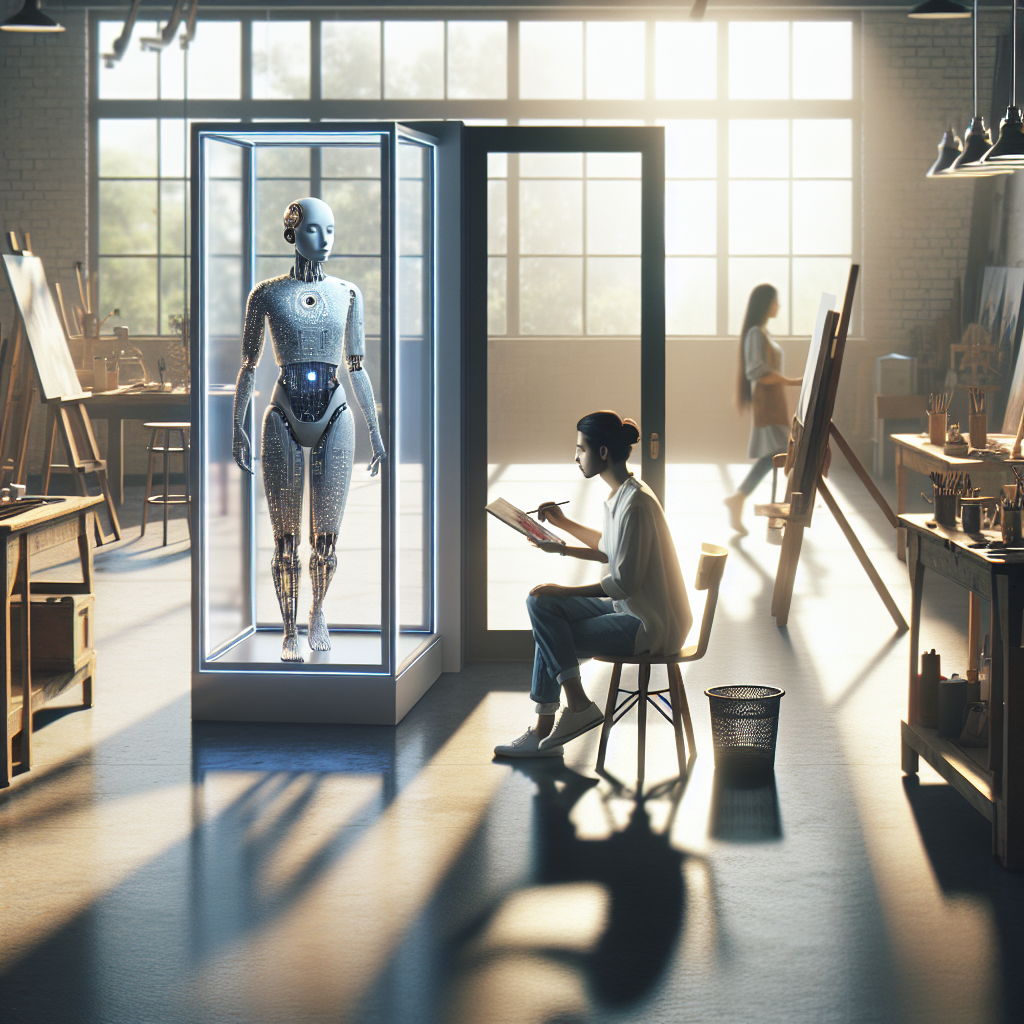
Meta description: Discover how AI art tools can unlock your creative potential and revolutionize artistic expression. Explore innovative techniques and practical applications.
The Dawn of the AI Art Renaissance
Have you ever felt creatively blocked, staring at a blank canvas or a blinking cursor, yearning for inspiration? What if an intelligent partner could help you break through those barriers and unleash your inner muse? AI art is rapidly transforming the creative landscape, offering unprecedented opportunities for artists and enthusiasts alike.
AI art tools are not designed to replace human artists. Instead, they serve as powerful collaborators, augmenting creativity and unlocking new avenues for artistic expression. They offer a unique way to overcome creative blocks, explore uncharted artistic territories, and bring unimaginable visions to life.
Exploring the Creative Potential of AI Tools
AI-powered art tools are more than just novelties; they represent a fundamental shift in how we approach creative endeavors. By understanding and leveraging their capabilities, you can tap into a wellspring of inspiration and generate art that is both innovative and deeply personal.
Text-to-Image Generation
One of the most captivating applications of AI in art is text-to-image generation. Simply by providing a textual description, users can prompt AI models to create corresponding visuals. These models, trained on vast datasets of images and text, possess the remarkable ability to translate abstract concepts into tangible artwork.
– Experiment with various text prompts to discover unique visual interpretations.
– Use descriptive language to guide the AI toward your desired style and content.
– Refine your prompts based on the generated outputs to achieve greater precision.
Platforms like DALL-E 2 and Midjourney have popularized this approach, enabling users to generate astonishingly detailed and imaginative images from simple text descriptions. This technology allows you to visualize concepts that were previously confined to the realm of imagination, effectively bridging the gap between thought and artistic creation.
Style Transfer and Image Enhancement
AI can also breathe new life into existing images through style transfer and enhancement techniques. Style transfer algorithms allow you to apply the aesthetic characteristics of one image to another, creating intriguing hybrids that blend familiar content with novel artistic styles.
– Transform a photograph into a painting reminiscent of Van Gogh or Monet.
– Apply the style of a famous artwork to your own creations.
– Experiment with different style combinations to discover unexpected results.
Image enhancement tools, powered by AI, can automatically improve the quality of your images by increasing resolution, reducing noise, and sharpening details. These tools are invaluable for both amateur and professional artists, allowing them to polish their work and present it in the best possible light.
Overcoming Creative Barriers with AI Assistance
Creative blocks are a common challenge for artists of all disciplines. AI tools can serve as a valuable resource for breaking through these barriers, offering fresh perspectives and sparking new ideas.
Generating Initial Concepts
When faced with a blank slate, AI can help you jumpstart the creative process by generating a range of initial concepts. By providing a few keywords or a brief description of your desired artwork, you can prompt AI models to produce a variety of visual ideas. These concepts can then serve as a foundation for further exploration and refinement.
Exploring Different Styles and Techniques
AI tools empower you to experiment with various artistic styles and techniques without the need for extensive training or specialized skills. Whether you’re interested in exploring abstract expressionism, surrealism, or photorealism, AI can help you simulate these styles and discover new creative directions.
– Use AI to generate artwork in different styles, such as Impressionism or Cubism.
– Experiment with various color palettes and compositions to create unique visual effects.
– Analyze the work of established artists using AI to identify key stylistic elements.
Collaborating with AI for Iterative Design
AI art tools facilitate a collaborative design process, allowing artists to iteratively refine their creations based on AI-generated feedback. By providing AI with initial artwork, you can prompt it to suggest modifications, variations, and enhancements. This iterative approach can lead to unexpected discoveries and push the boundaries of your artistic vision.
Practical Applications of AI Art
The applications of AI art extend far beyond the realm of fine art. From graphic design to marketing to entertainment, AI is transforming various industries and opening up new possibilities for creative expression.
Graphic Design and Visual Communication
AI-powered tools are streamlining graphic design workflows, enabling designers to create visually stunning materials more efficiently. AI can automate repetitive tasks, such as image resizing, background removal, and color correction, freeing up designers to focus on more strategic and creative aspects of their work. Furthermore, AI can generate design variations and suggest optimal layouts, helping designers explore different options and arrive at the best possible solution.
Marketing and Advertising
In the realm of marketing and advertising, AI is revolutionizing content creation and personalization. AI can generate engaging visuals for social media campaigns, design eye-catching advertisements, and even create personalized marketing messages tailored to individual customer preferences. This level of personalization can significantly improve engagement rates and drive conversions.
Entertainment and Media
The entertainment industry is embracing AI to create immersive and interactive experiences. AI can generate realistic special effects for movies and television shows, create personalized video game content, and even compose original music. As AI technology continues to evolve, we can expect to see even more groundbreaking applications in the entertainment and media landscape.
Ethical Considerations in AI Art
As AI art becomes more prevalent, it’s crucial to address the ethical considerations surrounding its use. Issues such as copyright infringement, authorship, and the potential for misuse need careful consideration and proactive solutions.
Copyright and Ownership
One of the primary concerns is copyright infringement. AI models are trained on vast datasets of images, many of which are copyrighted. This raises questions about the ownership of AI-generated artwork and the potential for legal disputes. It’s important to use AI tools responsibly and to ensure that you have the necessary rights to use any copyrighted material that may be incorporated into your artwork.
Authorship and Attribution
Determining the authorship of AI-generated art is another complex issue. While AI algorithms play a significant role in the creation process, human artists often provide guidance and input. Establishing clear guidelines for authorship and attribution is essential to ensure that artists receive proper recognition for their contributions.
Mitigating Bias and Misuse
AI models can perpetuate existing biases present in their training data, leading to discriminatory or offensive outputs. It’s crucial to be aware of these potential biases and to take steps to mitigate them. Additionally, AI art tools can be misused to generate deepfakes, spread misinformation, or create other harmful content. Responsible development and deployment of AI technology are essential to prevent such misuse. According to a 2023 Brookings report, “AI models can reflect and amplify societal biases present in the data they are trained on, leading to skewed or discriminatory outcomes.” [https://www.brookings.edu/research/how-artificial-intelligence-reinforces-racism-and-discrimination/]
Embrace the AI-Powered Creative Revolution
AI art is no longer a futuristic concept; it’s a tangible reality that is transforming the creative landscape. By embracing AI tools and exploring their potential, you can unlock your inner muse, overcome creative barriers, and create art that is both innovative and deeply personal.
The integration of AI into creative workflows is not about replacing human artists but about augmenting their capabilities and expanding their artistic horizons. Whether you’re a seasoned professional or a budding enthusiast, AI art offers unprecedented opportunities to explore uncharted territories, experiment with new styles, and bring your wildest visions to life.
Ready to embark on your AI-powered creative journey? Explore the latest AI art tools, experiment with different techniques, and discover the transformative power of AI in unlocking your artistic potential. Dive in, experiment, and witness the breathtaking possibilities that await.
For more insights or collaboration opportunities, visit www.MajesticVision.com.
Leave a Reply