
Your cart is currently empty!
Unlock Your Inner Artist The AI-Powered Muse Awaits
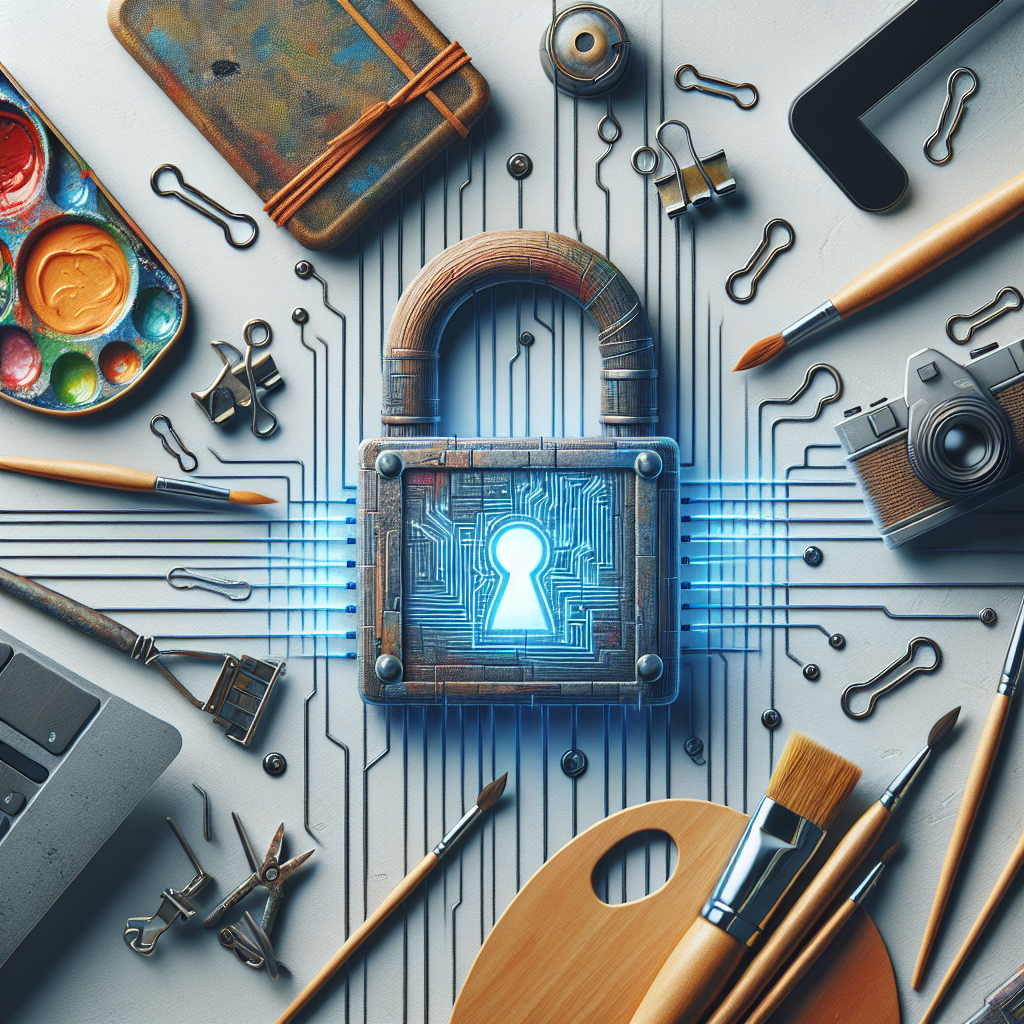
Can machines truly unlock the secrets of artistic expression? The rise of AI art is not just a technological marvel; it’s a profound shift in how we perceive creativity itself, with some experts predicting it could revolutionize the art world as we know it. Prepare to explore how artificial intelligence is becoming the muse of a new generation.
Understanding the AI Art Revolution
AI art is rapidly transforming the creative landscape, offering new tools and possibilities for artists and non-artists alike. It’s more than just a trend; it’s a fundamental change in how art is created, consumed, and appreciated.
How AI Generates Art
AI art generation relies on complex algorithms and machine learning models. These models are trained on vast datasets of images, allowing them to learn patterns, styles, and techniques. When prompted with a text description or an image, the AI can generate original artwork that reflects the learned information.
– Neural networks, particularly generative adversarial networks (GANs), are commonly used.
– GANs consist of two networks: a generator that creates images and a discriminator that evaluates their authenticity.
– Through continuous feedback, the generator improves its ability to produce realistic and creative outputs.
The Accessibility of AI in Art
One of the most significant impacts of AI art is its accessibility. No longer is artistic creation limited to those with years of training or specialized skills. AI tools empower anyone to bring their visions to life, democratizing the creative process.
– User-friendly interfaces make AI art generation accessible to all.
– AI platforms offer a wide range of styles and techniques, catering to diverse artistic preferences.
– The cost of entry is significantly lower than traditional art forms, removing financial barriers to creativity.
The Benefits of Using AI in Creative Expression
AI offers a plethora of benefits for both seasoned artists and newcomers. From sparking inspiration to streamlining workflows, AI tools are proving to be invaluable assets in the creative process.
Boosting Creativity and Overcoming Creative Blocks
AI can serve as a powerful source of inspiration, helping artists break through creative barriers and explore new ideas. By generating unexpected and novel images, AI can spark fresh perspectives and unlock hidden potential.
– AI can generate endless variations of a concept, providing artists with a wealth of options to explore.
– It can help artists visualize abstract ideas and concepts, making the creative process more tangible.
– AI can also identify patterns and trends in art, offering insights into emerging styles and techniques.
Enhancing Efficiency and Streamlining Workflows
For professional artists, AI can significantly enhance efficiency and streamline workflows. Repetitive tasks, such as creating variations of a design or generating background elements, can be automated, freeing up artists to focus on more critical aspects of their work.
– AI can quickly generate prototypes and mockups, accelerating the design process.
– It can automate tedious tasks, such as image editing and retouching.
– AI can also assist with project management, helping artists stay organized and on schedule.
Exploring New Artistic Styles and Techniques
AI enables artists to experiment with styles and techniques that might otherwise be inaccessible. By combining different artistic influences and generating unique visual effects, AI opens up new avenues for creative exploration.
– AI can emulate the styles of famous artists, allowing users to create artwork in the manner of Van Gogh or Picasso.
– It can generate surreal and abstract images that defy traditional artistic conventions.
– AI can also create entirely new artistic styles, pushing the boundaries of creative expression.
Navigating the Ethical Considerations of AI Art
As AI art becomes more prevalent, it’s crucial to address the ethical considerations that arise. Copyright issues, the role of human creativity, and the potential for misuse are all important factors to consider.
Copyright and Ownership
One of the most pressing ethical concerns is the issue of copyright and ownership. Who owns the copyright to AI-generated art? Is it the AI developer, the user who prompted the AI, or does the artwork fall into the public domain?
– Current copyright laws are often unclear on the issue of AI-generated art.
– Some argue that the user who prompted the AI should own the copyright, as they provided the creative input.
– Others believe that the AI developer should have some claim to ownership, as they created the underlying technology.
– The U.S. Copyright Office has stated that AI-generated art without human authorship cannot be copyrighted. [https://www.copyright.gov/](https://www.copyright.gov/)
The Role of Human Creativity
Another important question is the role of human creativity in AI art. Does AI art diminish the value of human-created art, or does it simply offer a new form of creative expression?
– Some argue that AI art lacks the emotional depth and personal expression of human-created art.
– Others believe that AI art is a collaborative effort between humans and machines, with each contributing their unique skills and perspectives.
– Ultimately, the value of AI art is subjective and depends on individual perspectives and preferences.
Potential for Misuse
Like any technology, AI art has the potential for misuse. It could be used to create deepfakes, generate propaganda, or infringe on existing copyrights.
– It’s essential to develop ethical guidelines and regulations to prevent the misuse of AI art.
– Education and awareness are crucial to ensure that AI art is used responsibly and ethically.
– Transparency in AI art creation is also important, so that viewers are aware of the role of AI in the artwork.
Practical Applications of AI Art Across Industries
AI art is not limited to the realm of fine art; it has numerous practical applications across various industries. From marketing and advertising to product design and education, AI art is transforming how businesses operate and engage with their audiences.
Marketing and Advertising
AI can be used to create personalized and engaging marketing materials, generate unique ad campaigns, and even design entire brand identities.
– AI can analyze customer data to create targeted ads that resonate with specific demographics.
– It can generate variations of ad creatives to optimize for different platforms and audiences.
– AI can also create interactive and immersive advertising experiences, such as virtual reality ads and augmented reality filters.
Product Design and Development
AI can assist designers in generating new product ideas, creating prototypes, and optimizing designs for manufacturability.
– AI can analyze market trends and customer preferences to identify unmet needs and opportunities.
– It can generate 3D models of products based on design specifications.
– AI can also simulate the performance of products under different conditions, helping designers identify potential flaws and optimize designs for durability and efficiency.
Education and Training
AI can be used to create interactive and engaging educational materials, personalize learning experiences, and provide students with individualized feedback.
– AI can generate customized learning content based on students’ individual needs and learning styles.
– It can provide real-time feedback on students’ work, helping them identify areas for improvement.
– AI can also create virtual simulations and interactive exercises that enhance learning and engagement.
Getting Started with AI Art: Tools and Platforms
Ready to explore the world of AI art? Numerous tools and platforms are available, catering to different skill levels and creative goals. Here are a few popular options:
DALL-E 2
DALL-E 2, developed by OpenAI, is one of the most advanced and widely used AI art generators. It excels at creating highly detailed and realistic images from text descriptions.
– DALL-E 2 offers a user-friendly interface and a wide range of customization options.
– It can generate images in various styles, from photorealistic to abstract.
– DALL-E 2 also allows users to edit existing images, adding new elements or modifying existing ones.
Midjourney
Midjourney is another popular AI art generator known for its artistic and dreamlike aesthetic. It is accessible through a Discord server, making it a collaborative and community-driven platform.
– Midjourney is particularly well-suited for creating surreal and imaginative artwork.
– It offers a wide range of artistic styles and customization options.
– Midjourney is constantly evolving, with new features and capabilities being added regularly.
NightCafe Creator
NightCafe Creator is a free AI art generator that offers a variety of algorithms and customization options. It is a great option for beginners who want to experiment with AI art without investing in a paid subscription.
– NightCafe Creator offers a user-friendly interface and a wide range of tutorials and resources.
– It allows users to generate artwork using various algorithms, including VQGAN+CLIP and Stable Diffusion.
– NightCafe Creator also has a vibrant community of AI artists who share their work and provide feedback.
AI art is not just a fleeting trend; it’s a powerful force that’s reshaping the creative landscape. By understanding its capabilities, ethical considerations, and practical applications, you can harness the power of AI to unlock your inner artist and explore new frontiers of creative expression. Embrace the AI-powered muse and discover the endless possibilities that await.
For more insights or collaboration opportunities, visit www.MajesticVision.com.
Leave a Reply