
Your cart is currently empty!
Can AI Save Our Oceans? Predicting Pollution’s Path
Meta description: Explore how AI and machine learning are revolutionizing ocean conservation by predicting and mitigating ocean pollution. Learn about innovative solutions!
The Alarming State of Ocean Pollution
Imagine our oceans, the lifeblood of our planet, choked by plastic, chemicals, and waste. The reality of ocean pollution is a stark and urgent crisis, threatening marine ecosystems and, ultimately, human health. But what if we could predict the paths of pollutants, anticipate their impact, and intervene before irreversible damage is done? Artificial intelligence is emerging as a powerful tool in this fight, offering innovative solutions to understand and combat ocean pollution on a scale never before possible.
The Scale of the Problem
– Estimates suggest that millions of tons of plastic enter the ocean each year.
– Chemical runoff from agriculture and industry creates dead zones, suffocating marine life.
– Oil spills and other accidents cause devastating environmental damage.
AI to the Rescue: Predictive Modeling
AI’s ability to analyze vast datasets and identify patterns makes it uniquely suited for predicting the movement and impact of pollutants in the ocean. By leveraging machine learning algorithms, scientists can create sophisticated models that simulate ocean currents, weather patterns, and pollutant dispersion. These models provide crucial insights for targeted interventions.
How AI Models Work
– Data Collection: Gathering data from satellites, sensors, and historical records.
– Algorithm Training: Training machine learning models on this data to recognize patterns and predict future movements.
– Simulation: Using the trained model to simulate the spread of pollutants under various conditions.
– Refinement: Continuously refining the model with new data to improve accuracy.
Example: Predicting Plastic Accumulation
Researchers at the University of Exeter have developed AI models to predict where plastic debris is likely to accumulate in the ocean, helping to focus clean-up efforts and prevent further harm to marine life. Their models consider factors like ocean currents, wind patterns, and the density of different types of plastic to identify hotspots of plastic pollution.
Monitoring and Detection with AI
Beyond prediction, AI also enhances our ability to monitor and detect ocean pollution in real-time. AI-powered sensors and drones can identify pollutants, track their sources, and assess their impact on marine ecosystems.
AI-Powered Sensors
– Autonomous underwater vehicles (AUVs) equipped with sensors can collect data on water quality, temperature, and the presence of pollutants.
– These sensors can transmit data in real-time, providing early warnings of pollution events.
Drones and Satellite Imagery
– Drones can capture high-resolution images of coastlines and waterways, identifying sources of pollution and assessing environmental damage.
– Satellite imagery, analyzed with AI, can detect large-scale pollution events, such as oil spills and algal blooms.
Case Study: Oil Spill Detection
In the aftermath of an oil spill, AI can quickly analyze satellite imagery to map the extent of the spill and track its movement, helping response teams deploy resources effectively. For example, after the Deepwater Horizon oil spill, AI algorithms were used to process satellite data and estimate the volume of oil released into the Gulf of Mexico.
Cleaning Up Our Oceans: AI-Driven Solutions
AI isn’t just about prediction and monitoring; it’s also driving the development of innovative solutions for cleaning up ocean pollution.
Robotic Cleaning Systems
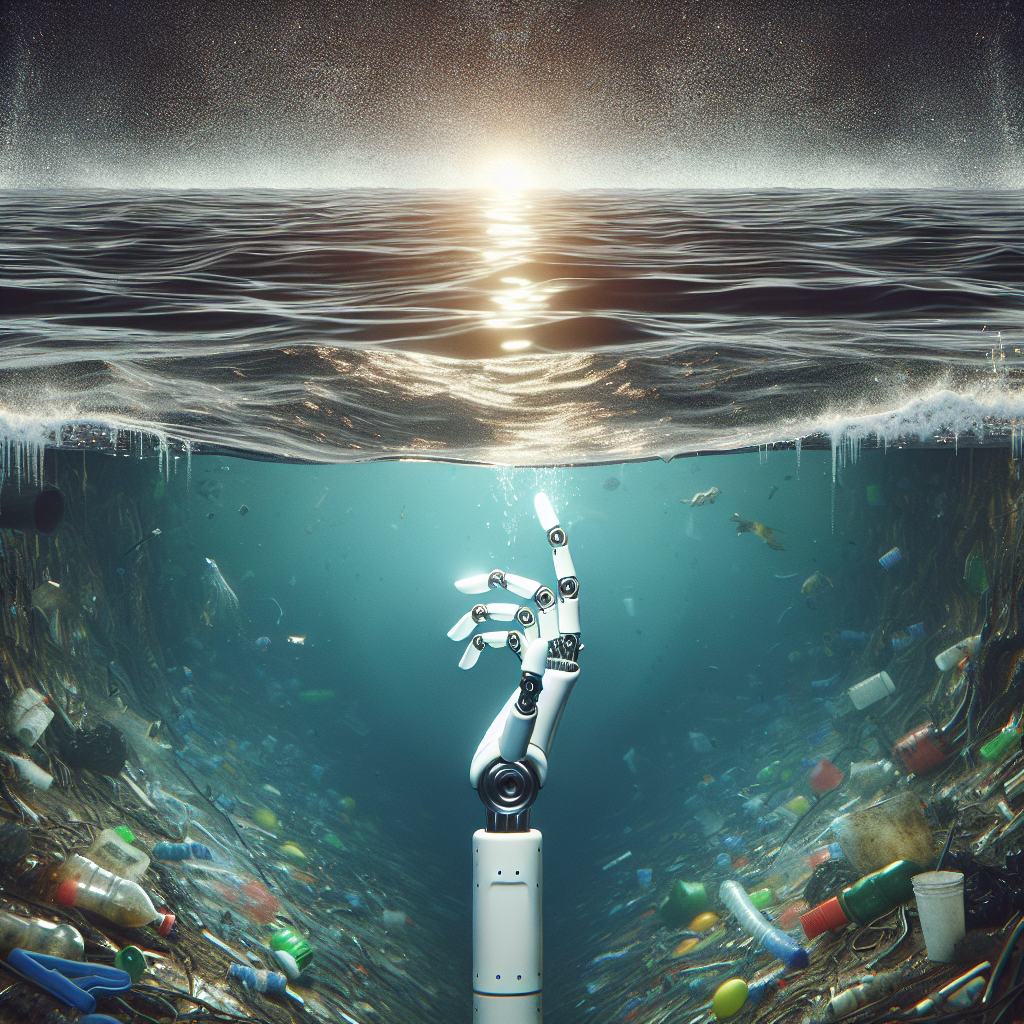
– Autonomous robots, guided by AI, can collect plastic debris from the ocean surface and seabed.
– These robots can differentiate between plastic and marine life, minimizing the impact on ecosystems.
Optimizing Waste Management
– AI can optimize waste management systems, reducing the amount of plastic and other pollutants that end up in the ocean.
– For instance, AI algorithms can analyze waste streams to identify opportunities for recycling and waste reduction.
The Ocean Cleanup Project
The Ocean Cleanup, a non-profit organization, is developing advanced technologies to remove plastic from the ocean. They use AI-powered systems to identify and target areas of high plastic concentration, making their cleanup efforts more efficient and effective.
Addressing Specific Pollutants with AI
Different types of ocean pollution require different solutions. AI can be tailored to address specific pollutants and their unique challenges.
Microplastics
– AI-powered filtration systems can remove microplastics from wastewater treatment plants, preventing them from entering the ocean.
– Researchers are also developing AI algorithms to identify and track microplastic sources, helping to target interventions.
Chemical Pollution
– AI can analyze chemical data to identify sources of pollution and predict their impact on marine ecosystems.
– This information can be used to develop targeted regulations and remediation strategies.
Nutrient Pollution
– AI can optimize agricultural practices to reduce nutrient runoff, a major cause of dead zones in coastal waters.
– By analyzing soil conditions, weather patterns, and crop data, AI can recommend optimal fertilizer application rates, minimizing the risk of nutrient pollution.
Challenges and Considerations
While AI offers immense potential for combating ocean pollution, there are also challenges and considerations to keep in mind.
Data Availability and Quality
– AI models require large amounts of high-quality data to be effective.
– Ensuring data accuracy and availability can be a challenge, particularly in remote ocean regions.
Ethical Considerations
– The use of AI in ocean conservation raises ethical questions about data privacy, algorithmic bias, and the potential impact on marine ecosystems.
– It’s important to develop ethical guidelines and regulations to ensure that AI is used responsibly.
Collaboration and Funding
– Addressing ocean pollution requires collaboration between governments, researchers, industry, and the public.
– Adequate funding is also essential to support the development and deployment of AI-powered solutions.
The Future of AI in Ocean Conservation
The role of AI in ocean conservation is only set to grow in the coming years. As AI technology advances and data availability increases, we can expect to see even more innovative solutions for predicting, monitoring, and cleaning up ocean pollution. The Nature Conservancy highlights AI’s potential in ocean conservation and sustainable resource management, showing how it can transform the ways we protect marine ecosystems.
For instance, AI is already being used to:
– Track endangered marine species and prevent poaching.
– Optimize fisheries management to ensure sustainable harvesting.
– Monitor coral reefs and detect signs of bleaching.
The future of our oceans depends on our ability to harness the power of AI and other advanced technologies. By working together, we can create a cleaner, healthier ocean for future generations.
Let’s embrace the potential of AI to safeguard our oceans, ensuring a sustainable future for marine life and the planet. Discover the power of AI in addressing global challenges. Take the first step towards a cleaner ocean. Learn how you can contribute to AI-driven conservation efforts by exploring our resources, supporting research initiatives, or advocating for policy changes.
For more insights or collaboration opportunities, visit www.MajesticVision.com.
Leave a Reply