
Your cart is currently empty!
Unlock Your Inner Artist The Surprising AI Muse in 2025
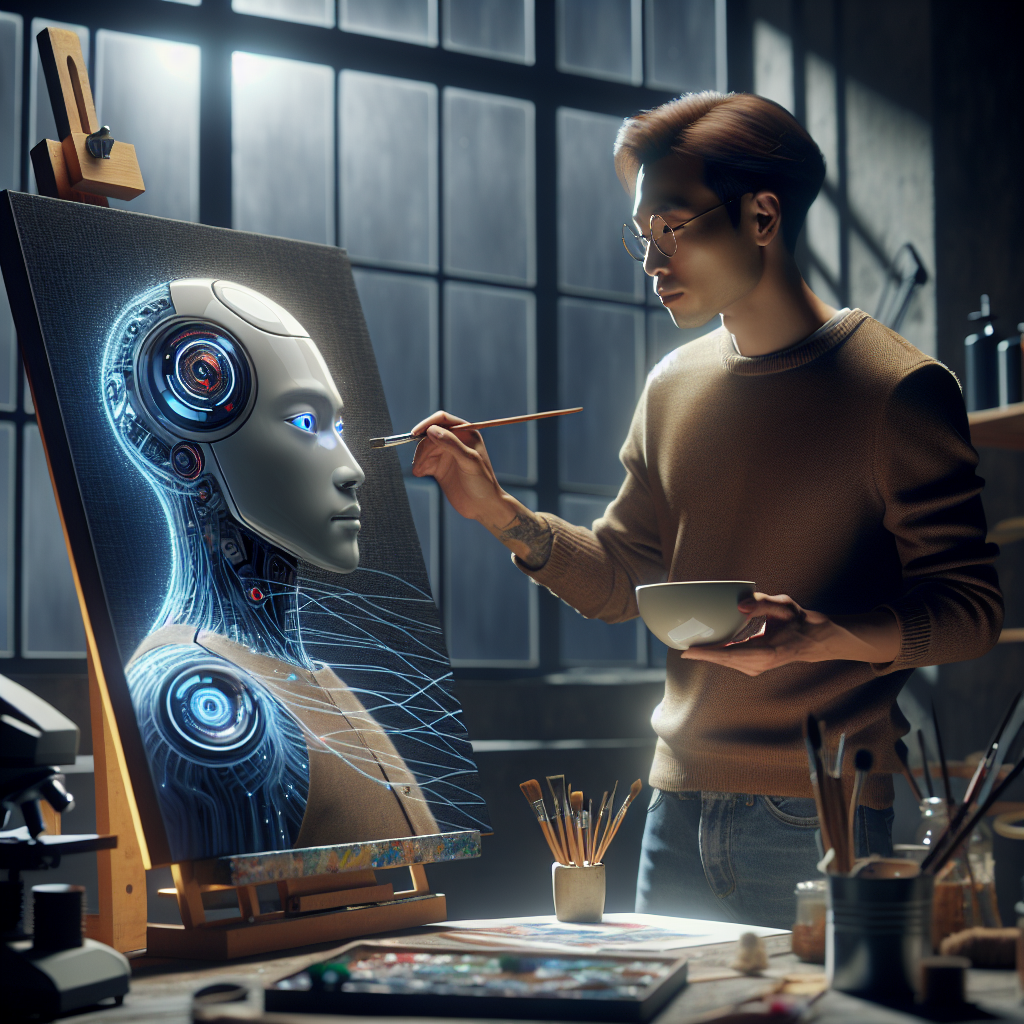
Can AI truly unlock untapped wells of imagination within us? By 2025, the landscape of creativity is being radically reshaped, with AI creativity acting as both a powerful tool and an unexpected muse. Artists and innovators are discovering that artificial intelligence is not a replacement for human ingenuity, but rather a catalyst that amplifies it, leading to astonishing breakthroughs and entirely new forms of artistic expression.
The Dawn of the AI-Powered Renaissance
The integration of artificial intelligence into creative fields signifies more than just a technological upgrade; it signals a profound shift in how we conceive, develop, and experience art. This “AI-powered renaissance” is democratizing the creative process, allowing individuals with diverse backgrounds and skill levels to participate in artistic endeavors previously confined to specialists.
AI as a Creative Partner
AI tools are no longer just assistants that perform mundane tasks. They are evolving into genuine creative partners, capable of generating original ideas, suggesting novel approaches, and even executing complex artistic visions. Think of AI algorithms that can:
– Compose original music in any style, adapting to the user’s preferences and emotional cues.
– Create stunning visual art, from photorealistic images to abstract masterpieces, based on simple text prompts.
– Generate compelling narratives and screenplays, complete with nuanced characters and intricate plotlines.
Breaking Down Creative Barriers
One of the most exciting aspects of this AI-driven revolution is its ability to break down traditional barriers to entry in the creative industries. Aspiring artists who may lack formal training or technical expertise can now leverage AI tools to bring their ideas to life. AI empowers creators by:
– Providing accessible platforms for experimentation and self-expression.
– Automating tedious and time-consuming tasks, freeing up artists to focus on the core creative aspects of their work.
– Offering personalized feedback and guidance, helping artists to refine their skills and develop their unique styles.
Exploring the Spectrum of AI Creativity
The applications of AI in creative fields are incredibly diverse, spanning a wide range of mediums and disciplines. From visual arts and music to writing and design, AI is empowering artists to push the boundaries of what is possible.
Visual Arts Transformed
AI has revolutionized the visual arts, offering artists new tools for creation and exploration. AI algorithms can generate stunning images from simple text prompts, create unique textures and patterns, and even assist in the restoration of damaged artwork.
– AI-powered image generators like DALL-E 2 and Midjourney are enabling artists to create photorealistic images, abstract art, and everything in between, simply by typing in a description.
– Neural style transfer algorithms allow artists to apply the artistic style of one image to another, creating unique and visually striking effects.
– AI is also being used to analyze and authenticate artwork, helping to combat forgery and preserve cultural heritage.
Musical Innovation with AI
The music industry is also undergoing a dramatic transformation, with AI playing an increasingly prominent role in composition, performance, and production. AI algorithms can compose original music in any style, generate realistic instrument sounds, and even perform live on stage.
– AI-powered music composition tools like Amper Music and Jukebox are enabling anyone to create original music, regardless of their musical background.
– Virtual synthesizers and instruments powered by AI are offering musicians new and innovative ways to create sounds and textures.
– AI is also being used to analyze and predict music trends, helping artists and labels to stay ahead of the curve.
Writing and Storytelling Reimagined
AI is also transforming the way we write and tell stories, offering writers new tools for generating ideas, developing characters, and crafting compelling narratives. AI algorithms can generate text in a variety of styles, translate languages, and even provide feedback on writing quality.
– AI-powered writing assistants like Grammarly and ProWritingAid are helping writers improve their grammar, style, and clarity.
– Natural language generation (NLG) models are being used to create news articles, product descriptions, and other forms of written content.
– AI is also being used to generate dialogue, plotlines, and character descriptions for novels, screenplays, and other forms of storytelling.
Navigating the Ethical Considerations of AI-Driven Art
As AI becomes more deeply integrated into creative processes, it is essential to address the ethical implications of this technology. Questions surrounding authorship, ownership, and the potential for bias in AI algorithms must be carefully considered to ensure that AI is used responsibly and ethically in the arts.
Authorship and Ownership in the Age of AI
One of the most pressing ethical questions is who should be considered the author or owner of AI-generated art. Is it the person who provided the initial prompt, the developers of the AI algorithm, or the AI itself?
– Current legal frameworks generally recognize the human creator as the author, even if AI played a significant role in the creation process.
– However, some argue that AI should be granted some form of intellectual property rights, particularly in cases where the AI’s contribution is substantial.
– Clear guidelines and legal frameworks are needed to address these complex issues and protect the rights of all stakeholders.
Addressing Bias and Representation
AI algorithms are trained on vast datasets of information, which can reflect existing biases and prejudices in society. This can lead to AI-generated art that perpetuates harmful stereotypes or excludes certain groups of people.
– It is crucial to carefully curate the datasets used to train AI algorithms, ensuring that they are diverse and representative of different perspectives.
– AI developers should also implement safeguards to prevent AI from generating biased or discriminatory content.
– Artists and users should be aware of the potential for bias in AI algorithms and take steps to mitigate its impact.
Preserving Human Creativity
While AI offers incredible potential for enhancing creativity, it is important to ensure that it does not stifle human expression or devalue the role of human artists.
– AI should be used as a tool to augment and amplify human creativity, not to replace it entirely.
– Artists should focus on developing their unique skills and perspectives, rather than relying solely on AI to generate art.
– Education and training programs are needed to help artists understand how to use AI effectively and ethically in their work. According to a recent study by the National Endowment for the Arts, investment in arts education is crucial for fostering creativity in the age of AI. [https://www.arts.gov/](https://www.arts.gov/)
Future-Proofing Your Creative Skills
In a world increasingly shaped by AI, it is essential for artists to adapt and evolve their skills to remain competitive and relevant. By embracing AI as a tool and focusing on developing uniquely human skills, artists can thrive in the AI-powered renaissance.
Embrace Lifelong Learning
The field of AI is constantly evolving, so it is important for artists to stay up-to-date on the latest developments and trends.
– Take online courses, attend workshops, and read articles and books about AI and its applications in the arts.
– Experiment with different AI tools and techniques to discover new ways of working and creating.
– Join online communities and connect with other artists who are using AI in their work.
Cultivate Uniquely Human Skills
While AI can automate many tasks, there are certain skills that are uniquely human and cannot be replicated by machines. These include:
– Critical thinking: The ability to analyze information, evaluate arguments, and form independent judgments.
– Emotional intelligence: The ability to understand and manage emotions, both in oneself and in others.
– Creativity and innovation: The ability to generate new ideas, solve problems, and create original works of art.
The Symbiotic Future of AI and Art
The future of art is not about AI replacing human artists, but rather about AI and humans working together in a symbiotic relationship. AI can handle the technical and repetitive aspects of art creation, freeing up artists to focus on the conceptual and emotional aspects of their work. This collaboration allows for:
– Enhanced productivity: AI tools can significantly speed up the creative process, allowing artists to produce more work in less time.
– Increased experimentation: AI can enable artists to explore new ideas and techniques that would be impossible to achieve on their own.
– Greater accessibility: AI can democratize the creative process, making it accessible to people with diverse backgrounds and skill levels.
Conclusion: Embracing the AI Muse
The rise of AI creativity presents both challenges and opportunities for artists and innovators. By embracing AI as a creative partner, navigating the ethical considerations, and future-proofing their skills, artists can unlock new levels of imagination and create groundbreaking works of art. The AI muse is here to stay, and it is up to us to harness its power and shape the future of creativity.
Ready to explore the endless possibilities of AI in art? Start experimenting with AI tools today and discover how AI can amplify your creative vision. For more insights or collaboration opportunities, visit www.MajesticVision.com.
Leave a Reply